
I remember the first time I got that email – the one inviting me for a scholarship interview. My heart did a little flutter, a mix of excitement and pure, unadulterated panic. It felt like I’d just been handed a map to a hidden treasure, but the map was written in a language I barely understood, and the treasure was guarded by a dragon of questions. If you’re reading this, chances are you’ve felt something similar, or you’re about to. Let me tell you, it’s a journey, but it’s one you can definitely navigate, and even enjoy, once you know a few tricks.
Picture this: I was a wide-eyed student, clutching my freshly printed resume, convinced that one wrong move, one stammered word, would sink my chances faster than a lead balloon. The idea of sitting across from stern-faced adults, who held the key to my academic dreams, was terrifying. But over the years, after countless interviews, both for scholarships and other opportunities, I’ve learned that a scholarship interview isn’t just an interrogation; it’s a conversation. It’s your chance to bring your application to life, to show them the person behind the grades and essays.
The biggest revelation for me was this: they actually want you to succeed. They’ve invited you because something in your application caught their eye. You’ve already passed the first hurdle. Now, it’s about proving you’re not just good on paper, but that you have the passion, the drive, and the personality to make the most of their investment. This isn’t a battle; it’s an opportunity to connect.
So, where do you even begin to prepare for a scholarship interview? For me, the real magic happened long before I even stepped into that room, or clicked that "join meeting" button for a virtual scholarship interview. It all started with digging deep into three crucial areas: them, me, and the intersection where we met.
First, researching the scholarship and the organization offering it. This might sound obvious, but you’d be surprised how many folks skip past the details. I once almost forgot to research the specific program I was applying for, focusing only on the general scholarship. Big mistake! Find out what their mission is. What kind of students do they typically support? What values do they champion? Is there a particular field of study they prioritize, or a community service aspect they emphasize? Knowing this isn’t just about sounding smart; it’s about tailoring your answers to resonate with what they care about. If they’re all about innovation, talk about your innovative projects. If community leadership is their thing, weave in your experiences leading initiatives. Show them you’ve done your homework, that you’re genuinely interested, not just in the money, but in their mission.
Next, and perhaps even more important, was understanding myself and my application inside out. Go back and read your personal statement, your essays, your recommendation letters, every single word you submitted. Why? Because they will, too. They might pick a specific sentence from your essay and ask you to elaborate. "You mentioned a pivotal moment in your life when you helped organize a fundraiser. Tell us more about that experience." If you haven’t revisited it, you might stumble. I used to reread my entire application package a day or two before the interview, jotting down key points and stories I wanted to highlight. This wasn’t about memorizing; it was about refreshing my memory and ensuring my spoken answers aligned with what I’d already presented on paper. Consistency is key.
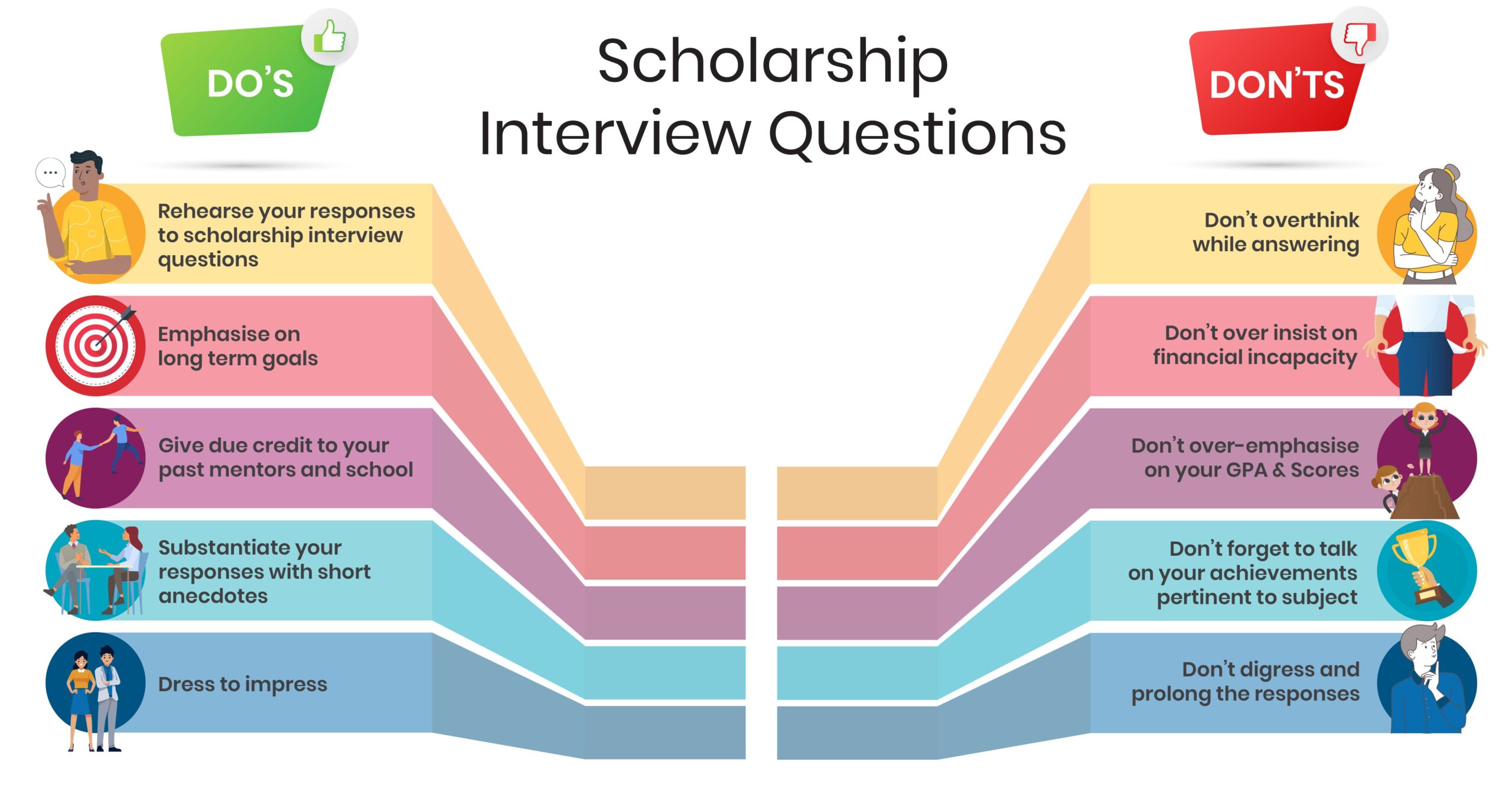
Once I had a handle on them and me, it was time to practice. Oh, the practice! This is where most of my initial anxiety melted away. I started by listing common scholarship interview questions. These are the questions that always seemed to pop up, like old friends at a party you weren’t expecting:
- "Tell me about yourself." (This isn’t an invitation for your life story, but a concise, compelling pitch about who you are, what you’re passionate about, and what brings you to this interview.)
- "Why are you interested in this particular scholarship?" (Connect your aspirations with their mission.)
- "What are your strengths and weaknesses?" (Be honest about weaknesses, but always frame them with how you’re working to improve.)
- "Where do you see yourself in five years?" (Show ambition, realism, and a plan.)
- "Describe a challenge you’ve faced and how you overcame it." (Focus on problem-solving skills and resilience.)
- "Why do you deserve this scholarship?" (Your chance to make a strong case for yourself, highlighting your unique contributions and needs.)
- "Is there anything else you’d like us to know?" (Often a trick question to see if you have anything compelling left unsaid.)
I didn’t just think about the answers; I said them out loud. First, to myself in front of a mirror (it felt silly, but it helped). Then, to a trusted friend or family member. Their feedback was invaluable. They pointed out when I rambled, when my answers were unclear, or when I sounded less enthusiastic than I truly felt. The goal wasn’t to memorize a script, but to feel comfortable discussing these topics, to have a few key stories ready to illustrate my points. For example, if asked about leadership, I’d have a specific anecdote about leading a school project, detailing the challenge, my actions, and the positive outcome. Storytelling is powerful; it makes your answers memorable and authentic.
Beyond the questions, I also prepared my own questions to ask them. This is often overlooked, but it’s a huge opportunity. Asking thoughtful questions shows genuine interest and engagement. Avoid questions whose answers are easily found on their website. Instead, ask about the scholarship’s impact on past recipients, specific programs they support, or what they see as the biggest challenges facing students in my field. For instance, "What are some of the ways past scholarship recipients have stayed connected with the organization?" or "Could you share more about the mentorship opportunities available through this scholarship?" It demonstrates that you’re thinking beyond just getting the money, that you’re interested in being part of their community.
Then came the logistics. What to wear? Always err on the side of professional and comfortable. Clean, neat, and appropriate attire shows respect. For me, a smart blouse and trousers, or a simple dress, always did the trick. For virtual interviews, ensure your background is tidy, well-lit, and free from distractions. Test your microphone and camera beforehand. Make sure your internet connection is stable. There’s nothing worse than technical glitches adding to your stress. And for in-person interviews, know exactly how you’re getting there, and plan to arrive at least 10-15 minutes early. Punctuality isn’t just polite; it shows responsibility.
The day of the interview itself was always a blur of last-minute nerves and deep breaths. But walking into that room, or logging into that call, I tried to remind myself: this is it. This is my moment to shine.
My strategy always started with a genuine smile and firm handshake (if in-person). Eye contact is crucial – it conveys confidence and engagement. Listen carefully to each question. It’s okay to pause for a moment to gather your thoughts before answering. A thoughtful pause is far better than a rushed, jumbled response.
Authenticity was my secret weapon. I realized early on that trying to be someone I wasn’t always backfired. Interviewers can spot a rehearsed, disingenuous answer a mile away. They want to know you. Share your passions, your struggles, your dreams. Don’t be afraid to show a little vulnerability, especially when discussing challenges. It makes you relatable and human. For example, when talking about a weakness, I might say, "I sometimes struggle with perfectionism, which can make me take longer on tasks. I’ve been working on setting realistic deadlines and learning to trust my initial instincts more, to improve my efficiency." This shows self-awareness and a commitment to growth.
Body language plays a silent but powerful role. Sit up straight, but not stiffly. Lean forward slightly to show engagement. Avoid fidgeting. Nod occasionally to show you’re listening. Your hands can be used to emphasize points, but don’t let them become a distraction. And smile! A warm, friendly demeanor can make a huge difference. For virtual interviews, make sure your webcam is at eye level, so you’re looking directly at the camera, simulating eye contact.
There were times when a question stumped me. My mind would go blank. In those moments, I learned it was perfectly fine to say, "That’s a great question. Let me take a moment to think about that." Or, "Could you please rephrase that?" This buys you a little time and shows thoughtfulness. Don’t be afraid to admit you don’t know something, but always follow up with how you would find the answer or what you’re learning. For instance, "I haven’t had direct experience with that specific software, but I’m a quick learner and have successfully picked up similar tools in the past."
As the interview drew to a close, they would invariably ask, "Do you have any questions for us?" This is your moment to shine with those prepared questions. Ask them with genuine curiosity. When they’ve answered, thank them for their insights.
And finally, the graceful exit. Thank them for their time and the opportunity. Reiterate your enthusiasm for the scholarship and the program. A final smile and a confident goodbye.
The journey doesn’t quite end when you leave the room. The follow-up is just as important. Within 24 hours, send a concise, polite thank-you note. This can be an email for virtual interviews, or a handwritten note if appropriate and you have their address. In your thank-you note, reiterate your gratitude, briefly mention something specific you discussed during the interview to show you were listening, and express your continued interest. For example, "Thank you again for the insightful conversation today. I particularly enjoyed learning about the scholarship’s mentorship program, and I’m even more excited about the possibility of contributing to ." This simple gesture can leave a lasting positive impression.
After that, it’s a waiting game. And let me tell you, the waiting can be agonizing. But this is where patience and perspective come in. You’ve done your best. You’ve presented your authentic self. Whatever the outcome, you’ve gained invaluable experience. Not every scholarship will be a perfect fit, and sometimes, despite your best efforts, things don’t work out. I’ve faced my share of rejections, and each one, though initially disappointing, taught me something new and made me stronger for the next opportunity.
Ultimately, a scholarship interview is a chance to tell your story. It’s about more than just your grades; it’s about your character, your aspirations, and your potential. It’s about making a human connection. So, breathe deep, prepare diligently, be yourself, and remember that every single person sitting across from you was once in your shoes, full of hopes and a little bit of fear. Go in there with confidence, curiosity, and a genuine smile, and you’ll not only navigate the maze but emerge stronger, regardless of the outcome. And who knows? You might just find that hidden treasure after all.
.webp "Navigating the Scholarship Interview Maze: A Story of Nerves, Nods, and Nailing It")