
I remember staring out my window, the city lights twinkling in the distance, a mug of lukewarm coffee clutched in my hand. It was late, and my mind was racing, fueled by a potent mix of ambition and utter confusion. The dream of studying abroad, specifically in Germany, had taken root years ago, but the path to get there felt like a tangled mess of unknown languages, foreign application systems, and, most dauntingly, money. Lots and lots of money. That night, feeling overwhelmed, I typed a desperate query into the search bar: "fully funded scholarships Germany for international students." And that, my friends, is how I first truly met DAAD.
Before DAAD became a lifeline, it was just another acronym on a long list of possibilities. But as I dug deeper, DAAD – the German Academic Exchange Service – began to emerge not just as a scholarship provider, but as a beacon, a guiding star for countless students like me. It wasn’t just about covering costs; it was about opening doors to a world-class education, a vibrant culture, and a future I could barely imagine. For a beginner like me, navigating the labyrinth of international education, DAAD felt like finding a wise, experienced friend in a very big, intimidating city.
Why Germany, you might ask? Well, it wasn’t a random pick. Germany had always held a certain allure. Its universities consistently rank among the best globally, known for their rigorous academics, cutting-edge research, and practical approach to learning. But beyond the academic prestige, there was something else that resonated with me: the blend of rich history and modern innovation, the stunning landscapes, and the reputation for being a welcoming place for international students. Plus, the idea of tuition-free public universities, a concept almost unheard of in many parts of the world, was incredibly appealing. Even with that, the cost of living, travel, and health insurance still loomed large. This is where DAAD truly shone, transforming a seemingly impossible dream into a tangible plan.
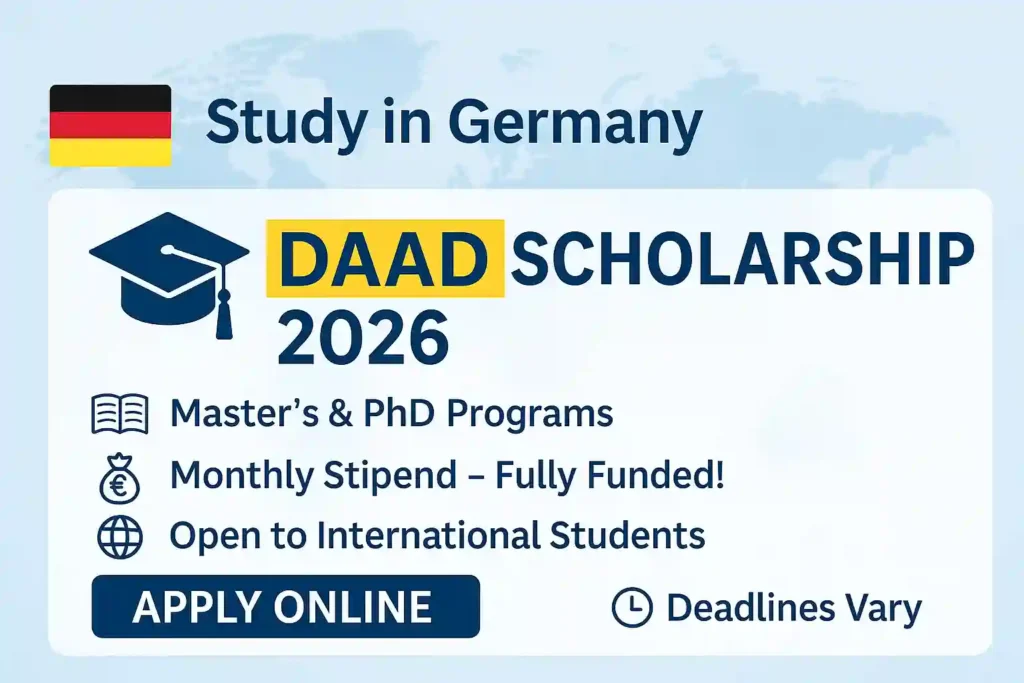
The DAAD scholarship isn’t just one scholarship; it’s a vast umbrella covering various programs for students, researchers, and academics from all corners of the globe. From Master’s degrees to PhDs, short research stays to language courses, there’s an incredible range. For me, a fresh graduate eager to pursue a Master’s degree, the "Master’s Study Programs for All Academic Disciplines" was the one that caught my eye. It felt tailor-made, promising to cover not just tuition (which, as I learned, was already mostly non-existent in public universities), but also a generous monthly stipend for living expenses, health insurance, travel costs, and even a language course if needed. It was a complete package, a true game-changer that promised financial freedom and allowed me to focus entirely on my studies and my new life in Germany. It was the kind of support that whispered, "Go on, you can do this."
My journey with DAAD wasn’t a sprint; it was a marathon, filled with moments of intense focus, occasional frustration, and ultimately, immense reward. It started with research – endless hours poring over the DAAD database, comparing university programs, reading student testimonials, and meticulously checking eligibility criteria. This initial phase felt overwhelming. Every university seemed to have its own set of rules, every program its unique requirements. My advice to anyone just starting out: don’t get discouraged. Break it down. Start with your field of study, then look for universities offering relevant Master’s programs taught in English (or German, if you’re already proficient). Once you have a few programs in mind, then cross-reference them with DAAD’s specific scholarship offerings. This focused approach saved me from drowning in information overload.
I remember settling on three universities, each offering a Master’s program that aligned perfectly with my academic background and future aspirations. This alignment is crucial. DAAD isn’t just looking for bright students; they’re looking for students who have a clear vision, who know why they want to study a particular subject in Germany, and how it will contribute to their personal and professional growth. My chosen program, a Master’s in Sustainable Development, felt like a natural progression from my undergraduate studies and resonated deeply with my desire to make a positive impact.
Once I had my target programs, the real work began: gathering the documents. This stage tested my patience and organizational skills like nothing else.
First, transcripts and degree certificates. These needed to be officially translated into English or German and notarized. This involved trips to my university and a certified translator, a process that took time and careful planning. Don’t underestimate how long this can take!
Next, the Curriculum Vitae (CV). This wasn’t just any CV; it had to be a German-style CV, typically without a photo, and focused on academic achievements, relevant work experience, and skills. I spent hours refining mine, ensuring every detail was clear, concise, and professional.
Then came the letters of recommendation. This was a pivotal piece. I approached two professors who knew me well, professors I had worked closely with on projects and who could genuinely speak to my academic abilities and character. I provided them with my CV, my statement of purpose, and details about the scholarship and programs I was applying for. This helped them write strong, specific letters. My tip: ask early, give them plenty of time, and remind them gently closer to the deadline. A lukewarm, generic letter won’t cut it.
The language certificate was another hurdle. Since my program was in English, I needed to provide proof of English proficiency, which for me meant taking the IELTS exam. If you’re applying for a German-taught program, you’ll need a TestDaF or Goethe-Institut certificate. Don’t wait until the last minute to take these exams; slots fill up quickly, and results take time to process.
But perhaps the most critical document, the one that truly allowed me to tell my story, was the motivation letter (also known as a statement of purpose). This wasn’t just a cover letter; it was my chance to pour my heart out, to explain why I deserved this opportunity. I wrote about my passion for sustainable development, my academic journey, my relevant experiences, and crucially, how studying in Germany and specifically through the DAAD scholarship would help me achieve my goals. I articulated what I hoped to gain academically, culturally, and personally, and how I envisioned contributing to the German academic community. I emphasized my long-term plans and how this Master’s degree would be a stepping stone. I drafted, revised, and re-revised it countless times, seeking feedback from mentors and friends. It had to be authentic, persuasive, and truly reflective of me. It’s not about listing achievements; it’s about weaving a narrative that connects your past, present, and future.
Finally, navigating the DAAD online portal itself. It’s user-friendly once you get the hang of it, but it requires careful attention to detail. Uploading documents, filling in personal information, selecting programs – every step needed precision. I double-checked everything, even triple-checked, before hitting that submit button. And the deadlines? They are absolute. Miss one, and your application is out. I made a detailed calendar, marking every deadline for both the universities and the DAAD scholarship.
After weeks of intense work, the application was finally submitted. Then came the agonizing waiting game. This was perhaps the hardest part: the silence. I checked my email incessantly, convinced I had missed something, or that the internet connection had somehow swallowed my application. Days turned into weeks, weeks into months. I tried to distract myself, but the thought of Germany and the DAAD scholarship was a constant hum in the background of my mind.
For some DAAD scholarships, an interview is part of the selection process. While my specific program didn’t require one, I know friends who went through it. They described it as a professional but friendly conversation, often conducted online. The key, they said, was to be yourself, be prepared to talk about your motivation letter in detail, articulate your research interests, and show genuine enthusiasm for studying in Germany and for your chosen field. Knowing a bit about current affairs in Germany or your specific academic area also helps.
And then, one ordinary Tuesday morning, it arrived. An email with "DAAD Scholarship Acceptance" in the subject line. My heart leaped. I remember the exact feeling: a rush of pure, unadulterated joy mixed with an overwhelming sense of relief. It wasn’t just an acceptance; it was a validation of all the hard work, all the late nights, all the doubts I had overcome. It was a tangible step towards a future I had only dared to dream of.
With the scholarship secured, the next phase of preparations began. The visa process for Germany can be quite detailed, involving appointments at the German embassy or consulate, providing proof of funds (which the DAAD scholarship letter covered perfectly), health insurance, and accommodation. DAAD provides excellent guidance and support during this stage, which was incredibly helpful.
Finding accommodation was another big item. While DAAD doesn’t typically arrange housing, they offer resources and advice. Many international students opt for student dormitories (Studentenwohnheime), which are affordable and a great way to meet people. I applied for a dorm room as soon as I received my university acceptance, and thankfully, secured a spot. This eased a lot of pre-departure stress.
Travel arrangements, packing lists, and learning basic German phrases occupied the weeks leading up to my departure. I downloaded language apps, practiced greetings, and tried to familiarize myself with German customs. Every little bit helped ease the transition.
Stepping off the plane onto German soil for the first time was surreal. The air felt different, the sounds were new, and the organized efficiency I had read about was immediately apparent. My first few weeks were a whirlwind of orientation programs, registering at the university, opening a bank account, and navigating public transport. It was exciting, disorienting, and utterly exhilarating.
Life as a DAAD scholar in Germany was everything I had hoped for and more. The academic environment was stimulating. Lectures were engaging, professors were approachable, and the emphasis on critical thinking and independent research was invigorating. I found myself challenged in ways I hadn’t anticipated, growing not just academically but intellectually. The university provided excellent support for international students, from language courses to counseling services.
Culturally, Germany was a fascinating immersion. I learned to appreciate the punctuality, the delicious bread, the beautiful Christmas markets, and the directness in communication. I made friends from all over the world, sharing stories, cooking meals, and exploring cities together. The DAAD network itself was a fantastic resource. They organized events, seminars, and excursions, allowing me to connect with other scholars, expand my professional network, and experience different parts of Germany. From hiking in the Bavarian Alps to exploring the vibrant art scene in Berlin, every experience enriched my journey.
Of course, it wasn’t always smooth sailing. There were moments of homesickness, confusion over bureaucratic processes, and the occasional language barrier frustration. But each challenge was an opportunity to learn, to adapt, and to build resilience. The support from my fellow DAAD scholars and the university community made these moments easier to navigate. It taught me invaluable lessons about perseverance and cultural understanding.
For anyone dreaming of following a similar path, here are my earnest tips:
- Start Early, Seriously Early: The application process is extensive. Give yourself ample time for research, document gathering, language tests, and writing your motivation letter. Rushing will only lead to mistakes.
- Research Relentlessly: Understand the different DAAD programs. Find university programs that genuinely excite you and align with your background and future goals. Don’t just pick a program; understand its curriculum, faculty, and what makes it unique.
- Tailor Your Application: Every part of your application – your CV, your motivation letter, your recommendations – should speak directly to the specific scholarship and program you’re applying for. Generic applications rarely succeed.
- Craft a Compelling Motivation Letter: This is your voice. Tell your story, explain your passion, and clearly articulate why Germany, why this program, and why DAAD. Be authentic and persuasive.
- Seek Strong Recommendations: Choose professors or supervisors who know you well and can write specific, detailed letters about your abilities and potential.
- Proofread Everything: A single typo can undermine your professionalism. Get others to read through your application documents.
- Be Patient and Persistent: The waiting game is tough, but don’t give up hope. If it doesn’t work out the first time, learn from the experience and try again.
- Embrace the Journey: The application process itself is a learning experience. Enjoy the process of self-reflection and discovery.
- Show Your Passion: Let your enthusiasm for your field, for Germany, and for this incredible opportunity shine through in every part of your application.
My DAAD scholarship experience was more than just a means to fund my education; it was a transformative chapter in my life. It gave me access to world-class academics, immersed me in a rich and diverse culture, and connected me with an incredible global network of scholars and professionals. It broadened my horizons, challenged my perspectives, and equipped me with skills and experiences that continue to shape my path. If you’re standing where I once stood, dreaming of studying in Germany but feeling overwhelmed by the journey ahead, let my story be your encouragement. The DAAD scholarship is a challenging but incredibly rewarding opportunity. With dedication, careful preparation, and a clear vision, your dream of studying in Germany can absolutely become your reality. Take that first step; it might just change everything.