
The first time I truly felt the magnetic pull of Korea wasn’t through a catchy K-pop song or a dramatic K-drama scene, though I admit those played their part later. It was a quiet afternoon, scrolling through an online forum, when I stumbled upon a photo of a bustling market in Seoul, illuminated by lanterns and neon signs, smelling (or so I imagined) of delicious street food. Something about that image, the vibrant chaos mixed with an underlying sense of order, just captivated me. I thought, "I need to see that. I need to experience that." And then, the more practical, slightly terrifying thought followed: "How could I possibly live there, even for a little while?" That question became the seed of a dream, a dream that eventually blossomed into a fully funded scholarship to study in Korea.
Looking back, the path seems clearer, but at the beginning, it was a dense fog. I was a young student, brimming with curiosity but utterly clueless about international education. I knew Korea was far, tuition was expensive, and my family certainly couldn’t afford it. So, I did what most overwhelmed beginners do: I started searching. My initial queries were vague: "study in Korea," "Korea student visa," "how to go to Korea for school." Slowly, through countless hours of reading blogs, university websites, and government portals, a magical word started appearing more and more frequently: "scholarship." Not just any scholarship, but specifically "Korea scholarship."
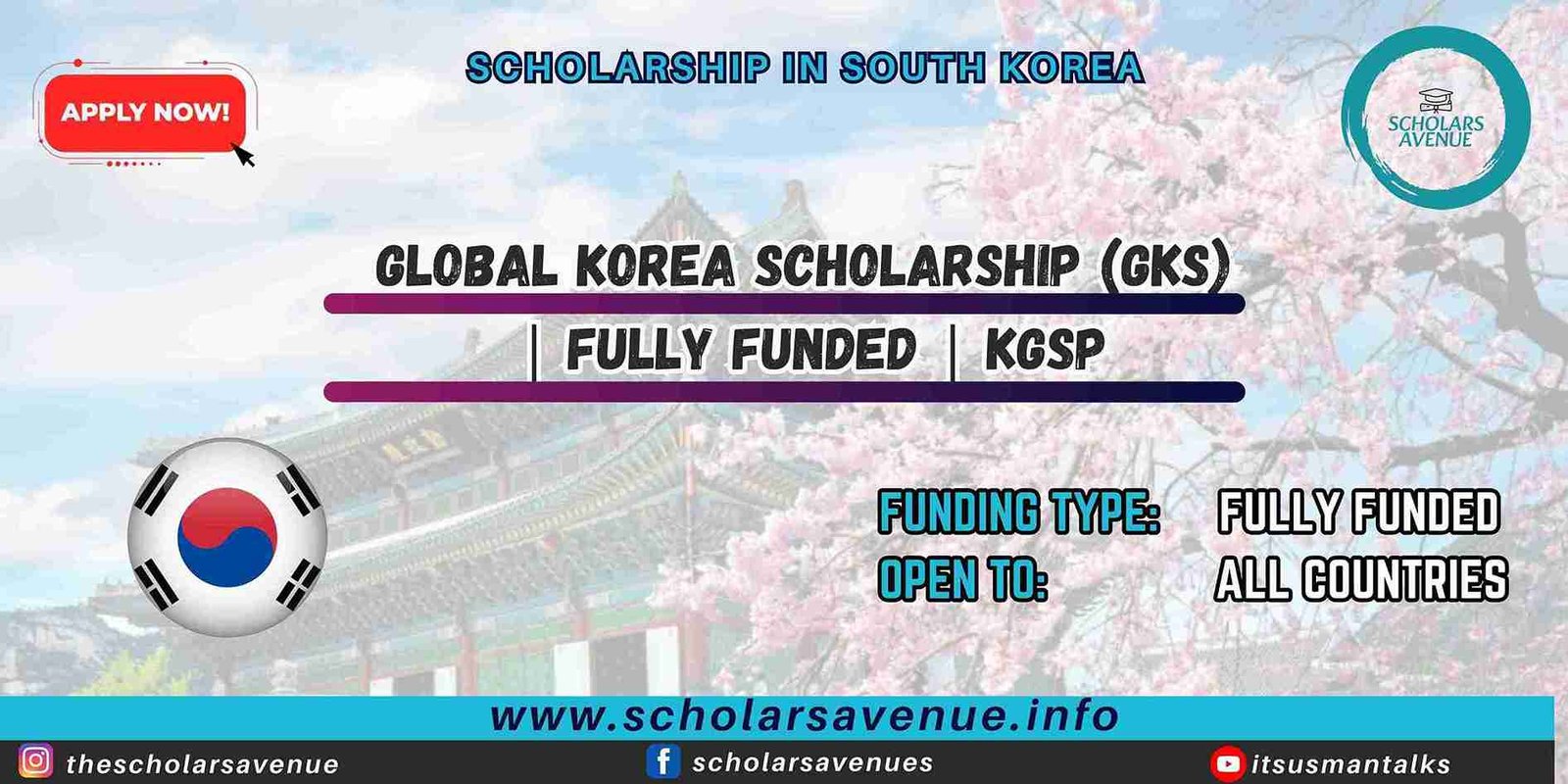
It felt like discovering a hidden treasure map. The biggest, most prominent one that kept popping up was the Global Korea Scholarship (GKS). It sounded too good to be true: full tuition, monthly stipend, airfare, medical insurance, and even a Korean language training period. My heart fluttered with a mix of excitement and disbelief. Could I actually get something like that? The GKS wasn’t the only one; I learned about university-specific scholarships, often offered to international students based on academic merit or specific program needs. But GKS, being a government-funded initiative, felt like the gold standard, the ultimate goal for someone like me.
The journey from "dreaming" to "doing" was arduous, a true test of patience and persistence. My first step was research, deep and extensive. I didn’t just look at the GKS guidelines; I scoured university websites for programs that aligned with my academic interests. Did they offer my major in English? What were their specific admission requirements for international students? What was the campus culture like? I made spreadsheets, yes, actual spreadsheets, listing universities, programs, application deadlines, and required documents. This helped me organize the mountain of information and prevent myself from getting lost in the details.
Then came the dreaded document gathering phase. This is where many aspiring scholars get overwhelmed, and honestly, I nearly did too. It felt like an endless checklist. First, my academic records: transcripts from every institution I’d ever attended, translated and notarized. This involved trips to my previous schools, contacting administrative offices, and finding certified translators. It wasn’t just about getting the papers; it was about ensuring they were perfectly presented, with no errors or missing stamps.
Next were the recommendation letters. This is a crucial part of any scholarship application. I approached two professors who knew me well, professors whose classes I had actively participated in and where I had excelled. I didn’t just ask, "Can you write me a recommendation?" I scheduled meetings, explained my dream of studying in Korea, shared my academic goals, and provided them with my CV and a draft of my personal statement. This gave them the context they needed to write strong, personalized letters that highlighted my strengths and suitability for a rigorous academic program abroad. Their support was invaluable.
The personal statement and study plan were, for me, the heart of the application. This wasn’t just about listing my achievements; it was about telling my story, showing my passion, and convincing the scholarship committee that I was a deserving candidate. I spent weeks drafting and refining these essays. I wrote about what drew me to Korea, not just the K-culture, but its technological advancements, its unique blend of tradition and modernity, and how my academic background prepared me for a Korean university environment. I articulated my research interests clearly, explaining how studying in Korea would enhance my understanding and contribute to my future career. I focused on authenticity, letting my genuine curiosity and determination shine through. I made sure to link my past experiences to my future aspirations in Korea, creating a cohesive narrative. It wasn’t about being perfect; it was about being genuine and demonstrating a clear vision.
Language proficiency was another significant hurdle. While many programs in Korea are offered in English, demonstrating proficiency (usually via TOEFL or IELTS) is often required. For GKS, there’s also a strong emphasis on learning Korean. While not always mandatory for the initial application, having some Korean language ability, even basic, can definitely boost your application. It shows commitment. I started taking basic Korean classes online, not just for the application, but because I truly wanted to connect with the culture. This proactive step later proved incredibly helpful during my language training period in Korea.
Finally, with all documents meticulously prepared, checked, and double-checked, I submitted my application. The waiting period that followed was, without exaggeration, one of the most agonizing times of my life. Every email notification sent my heart racing. I tried to distract myself, but the dream of Korea was always lurking in the back of my mind. I remember countless nights lying awake, replaying every detail of my application, wondering if I had done enough, if I had missed something crucial. It was a test of resilience in itself.
Then, one ordinary Tuesday afternoon, an email popped up. The subject line was generic, but the sender was the university I had applied to through the GKS track. My hands trembled as I clicked it open. "Congratulations…" The rest was a blur of joyful tears. I had been accepted! Not just to the university, but also nominated for the Global Korea Scholarship. The world suddenly felt brighter, full of possibilities. That moment, receiving the acceptance letter, validated every late night, every stressful document chase, every moment of doubt. It was real. My dream was coming true.
The pre-departure phase was a whirlwind. There were visa applications, health checks, packing decisions, and saying goodbye to family and friends. It was exciting, but also bittersweet. I bought a new winter coat, tried to learn more Korean phrases, and mentally prepared myself for a completely new life. The scholarship covered my airfare, which was a huge relief, allowing me to focus on the emotional preparations rather than financial ones.
Arriving in Korea was surreal. The moment I stepped out of Incheon International Airport, I was hit by the crisp autumn air and the sight of Korean characters everywhere. It felt like stepping into a different dimension. The first few months were a delightful chaos. The GKS scholarship provided a mandatory language training period, which was a lifesaver. Living with other GKS scholars from all over the world, we learned Korean together, navigated the subway system, discovered amazing street food, and supported each other through homesickness and cultural misunderstandings. It was an incredible bonding experience, forming friendships that have lasted to this day.
Life as a scholarship holder in Korea was everything I had hoped for and more. Academically, it was challenging but incredibly rewarding. My professors were experts in their fields, and the resources available at the university were top-notch. The classes were stimulating, pushing me to think critically and engage with new ideas. I remember one particular project where I got to collaborate with Korean students on a real-world problem, applying theoretical knowledge to practical solutions. This hands-on experience was invaluable. The monthly stipend provided by the scholarship was sufficient to cover my living expenses, including food, transportation, and some leisure activities, allowing me to focus entirely on my studies without financial worries. It’s a truly freeing feeling to know that your education is fully funded, letting you immerse yourself completely in the experience.
Beyond academics, Korea itself was an endless adventure. I explored ancient palaces nestled amidst modern skyscrapers, hiked scenic mountains, savored countless bowls of bibimbap and plates of kimchi, and experienced the vibrant nightlife of Seoul. I traveled to different cities, each with its unique charm, from the historical Gyeongju to the bustling Busan. Every corner offered a new discovery, a new cultural insight. I learned about Korean etiquette, tried my hand at traditional crafts, and even found myself singing at a noraebang (karaoke room) with my new friends.
Of course, it wasn’t always a fairytale. There were moments of struggle. The language barrier, even after months of training, could still be frustrating. Ordering food, asking for directions, or understanding complex conversations sometimes felt like an insurmountable task. Homesickness would occasionally creep in, especially during holidays. Academic pressure was real; Korean universities are rigorous, and maintaining good grades was crucial for continuing the scholarship. There were times when I felt overwhelmed, lonely, or just plain tired.
But these challenges, in hindsight, were part of the growth process. I learned to be incredibly resourceful, using translation apps, hand gestures, and a lot of patience. I leaned on my fellow GKS scholars and local Korean friends for support and understanding. I developed a resilience I didn’t know I possessed. Every time I overcame a hurdle, big or small, I felt a surge of accomplishment and a deeper connection to my new home. The scholarship wasn’t just providing me with an education; it was transforming me into a more independent, adaptable, and globally-minded individual.
My time as a scholarship student in Korea was more than just a period of study; it was a journey of self-discovery. It taught me the value of perseverance, the beauty of cultural exchange, and the importance of stepping out of my comfort zone. It opened my eyes to a world beyond my own borders and instilled in me a profound appreciation for different perspectives.
To anyone out there reading this, dreaming of a similar journey, let me offer a few words of encouragement. The path to a Korea scholarship, especially something like GKS, isn’t easy. It demands dedication, meticulous preparation, and unwavering belief in yourself. You might face rejections, setbacks, or moments of doubt. But every single effort you put in, every late night spent refining your essays, every document you meticulously prepare, brings you closer to your goal. Start early, research thoroughly, personalize your application, and let your genuine passion for Korea and your chosen field shine through. Don’t be afraid to ask for help or seek guidance from others who have walked this path.
The opportunities that a Korea scholarship can unlock are truly life-changing. It’s not just about the financial support; it’s about the immersive cultural experience, the world-class education, the international network you build, and the personal growth you undergo. My journey to a fully funded scholarship in Korea started with a simple photo and a curious question. It ended with a heart full of memories, a mind enriched with knowledge, and a spirit forever changed by the vibrant, dynamic, and welcoming embrace of South Korea. If I could do it, with all my initial cluelessness and apprehension, so can you. Take that first step, and see where your dream takes you.