
The blank page stared back at me, a vast, intimidating white space on my laptop screen. It was late, the kind of late where the city outside had quieted down, leaving only the hum of my old fan and the relentless ticking of my own anxiety. I was trying to write a scholarship motivation letter, and to say I was stuck would be an understatement. My dream, a dream of studying abroad and unlocking a future I could only just glimpse, felt like it was hanging by a thread, a thread woven from words I couldn’t seem to find.
If you’re reading this, you’re probably in a similar boat, staring down that same blank page, or perhaps just starting to think about what a scholarship motivation letter even is. Let me tell you, I’ve been there. I’ve stumbled, I’ve fumbled, and yes, I’ve even wept a little in frustration. But I also learned. I learned what makes those letters sing, what makes them stand out in a pile of hundreds, and ultimately, what makes them open doors you once thought were firmly shut. This isn’t just a guide; it’s my story, a journey through the often-confusing landscape of scholarship applications, seen through the lens of that one crucial document.
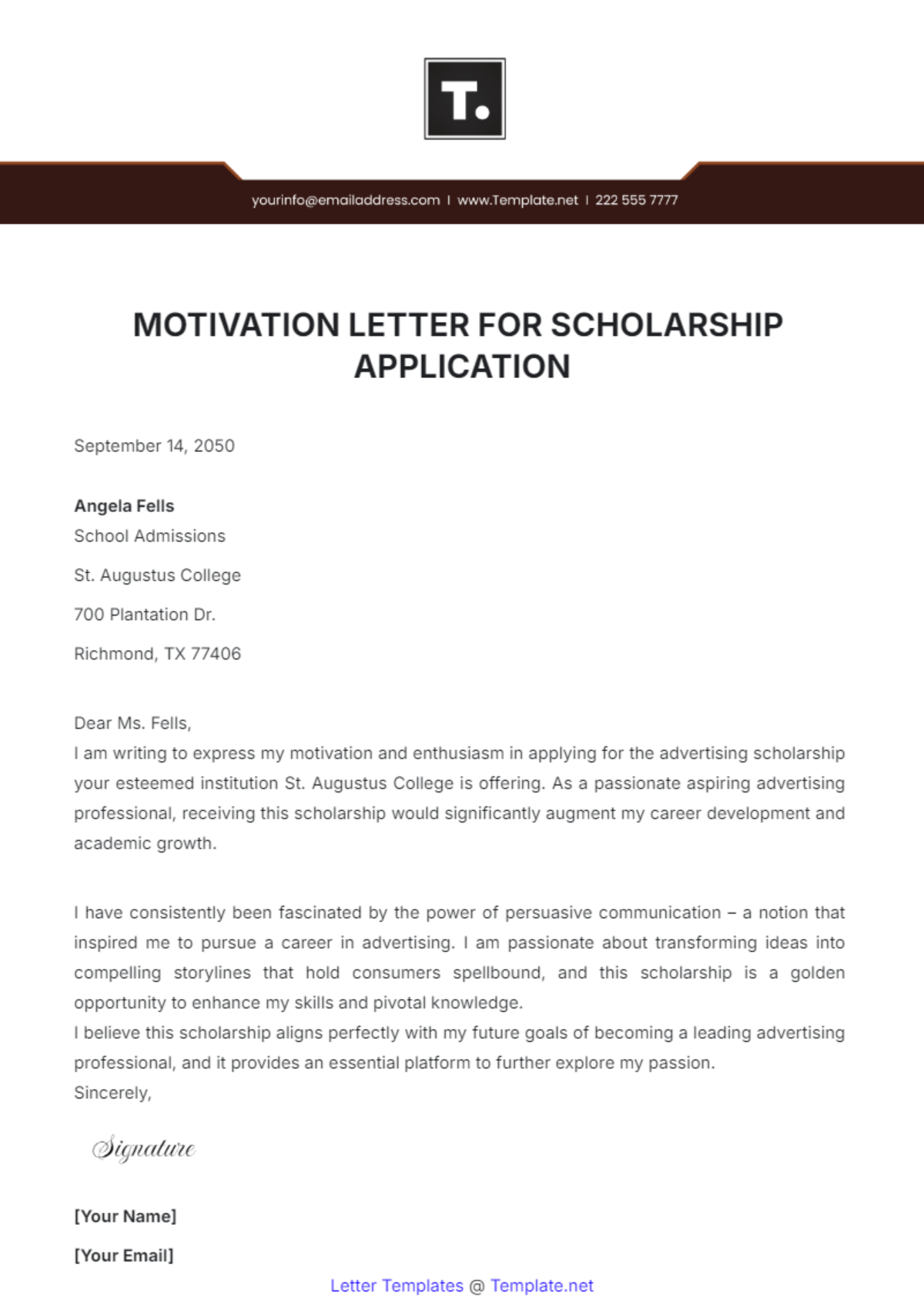
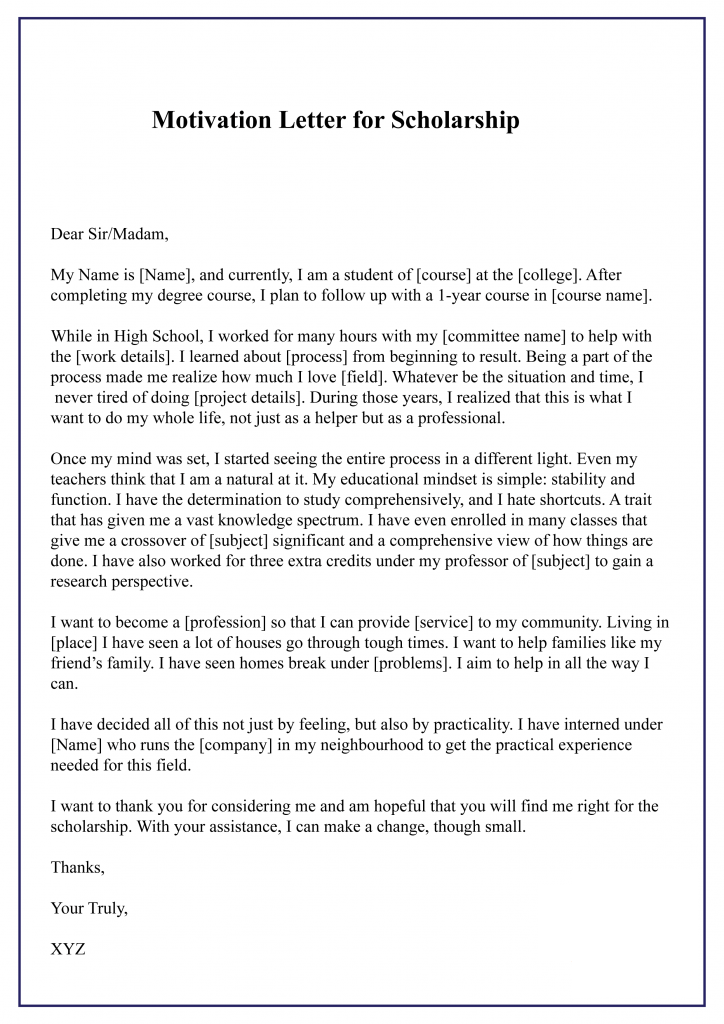
When I first started, I thought a motivation letter was just a formal essay, a place to list my achievements and perhaps express a polite desire for funding. Boy, was I wrong. My early attempts were stiff, generic, and frankly, boring. I’d write things like, "I am writing to express my keen interest in the as I believe my academic record makes me a suitable candidate." Sounds professional, right? But it’s also forgettable. It tells the committee nothing about me, my passions, my struggles, or the unique spark that makes me, well, me. And that, my friends, is the first, most fundamental lesson: your motivation letter isn’t just a list of facts; it’s a living, breathing narrative of who you are and why you deserve this chance.
After a string of rejections that felt like personal affronts, I decided to change my approach. I realized I wasn’t just applying for money; I was trying to connect with a group of people who had the power to invest in someone’s future. And like any good investment, they wanted to know the return – not just financial, but intellectual, social, and personal. They wanted to see potential, passion, and purpose.
The real game-changer for me was understanding that a motivation letter is your chance to tell your story, to paint a vivid picture of your journey, your aspirations, and how this particular scholarship fits into that grand design. It’s about making them feel something, not just read something.
So, where do you begin when the task feels so monumental? For me, it started with research. And I don’t mean a quick glance at the scholarship website. I mean deep-dive, detective-level research. What are the scholarship provider’s values? Do they prioritize leadership, community service, academic excellence, or innovation? What kind of students have they supported in the past? What are the specific goals of the program you’re applying for? Knowing this inside out is like having a secret map to their heart. You can then tailor your story to resonate with their mission, showing them not just why you need them, but why you are the perfect fit for their vision.
I remember one scholarship specifically mentioned a commitment to sustainable development. My initial draft barely touched on it. After digging deeper, I realized this wasn’t just a side note; it was central to their entire ethos. I went back and wove in my experiences volunteering with a local environmental group, talking about the small community garden we started and the sense of accomplishment it gave me. It wasn’t about exaggerating; it was about highlighting the parts of my life that genuinely aligned with their values. That’s the magic of tailoring – it makes your letter feel less like a mass application and more like a personal conversation.
Now, let’s talk about the actual writing, the architecture of a compelling letter. Think of it as a journey you’re taking the reader on.
1. The Irresistible Hook: Grab Them From the Start.
Forget those stiff, formal openings. My most successful letters started with something personal, something that hinted at my passion or a pivotal moment. For example, instead of "I am writing to apply…", I once started with, "The flickering streetlights of my hometown always reminded me of the dim prospects facing many young people, a reality that ignited in me a fierce desire to understand and solve societal challenges." See the difference? It immediately tells them something about your character and motivation, not just your intention. It invites them in. Think about a specific memory, a challenge, or a moment of realization that sparked your interest in your field or this scholarship.
2. Your Academic Journey & Passion: More Than Just Grades.
This is where you connect your past academic pursuits to your present aspirations. Don’t just list your GPA. Talk about why you chose your major, what courses truly ignited your curiosity, or a project that pushed your boundaries. For instance, I once wrote about a particularly challenging research paper on urban planning, not just mentioning the A I got, but describing the late nights, the frustrating dead ends, and the ultimate satisfaction of finding a unique solution. This shows intellectual curiosity and perseverance. It’s about demonstrating your engagement, not just your achievement.
3. Experiences That Shaped You: Beyond the Classroom.
Scholarship committees want well-rounded individuals. This is your chance to highlight extracurricular activities, volunteering, work experience, or personal projects. But again, don’t just list them. Tell a mini-story. If you volunteered at a soup kitchen, don’t just say, "I volunteered at XYZ Soup Kitchen." Instead, describe an interaction you had, a lesson you learned about empathy, or how it shifted your perspective on community. This is where you demonstrate leadership, teamwork, problem-solving skills, and your commitment to making a difference. I remember talking about how organizing a small campus event taught me the importance of clear communication and delegating tasks effectively, even when things went sideways.
4. The Crucial "Why Us?": The Perfect Match.
This is arguably the most vital part of your letter. You’ve told them about yourself; now you need to explain why this specific scholarship and this specific program/university are the perfect next step for you. This is where your deep research comes in. Mention specific professors whose work you admire, unique courses offered, research facilities, or even the ethos of the institution. How will this scholarship specifically help you achieve your goals? And just as important, how will you contribute to their community? Will you bring a unique perspective, a particular skill set, or a commitment to their values? Make it clear that you haven’t just copy-pasted this paragraph from another application. My most powerful "Why Us?" paragraphs were those where I could name a specific faculty member whose research aligned with mine, or a unique program feature that would directly help me develop a particular skill.
5. Your Future Aspirations: The Bigger Picture.
What do you plan to do with this education and scholarship? This is your chance to articulate your short-term and long-term goals. Be ambitious, but also be realistic and specific. How will your studies contribute to your community, your field, or even the world? This shows vision and a sense of purpose. For me, connecting my academic goals to broader societal impact was key. I wasn’t just studying urban planning to get a job; I wanted to help design more sustainable and equitable cities for future generations. This showed them I had a clear trajectory and a desire to make a difference beyond myself.
6. The Powerful Conclusion: Leave a Lasting Impression.
This isn’t just a polite sign-off. Reiterate your enthusiasm, briefly summarize your core message (your passion, your fit, your future), and express gratitude for their consideration. End with a strong, confident statement about your readiness and commitment. Something like, "I am confident that my dedication to and my commitment to make me an ideal candidate, and I eagerly anticipate the opportunity to contribute meaningfully to your vibrant community."
Now, beyond the structure, there’s the secret sauce: making it sound like you. This is where many struggle, often feeling pressured to adopt a "formal" tone that strips their writing of all personality. Resist that urge!
Embrace Storytelling: Humans are wired for stories. Instead of saying, "I have strong leadership skills," tell a story about a time you demonstrated leadership. Maybe it was organizing a complex group project, or stepping up when a team member was struggling. Specific anecdotes are far more impactful than vague claims. My most memorable stories often involved a moment of failure or challenge, and how I overcame it. This shows resilience and growth.
Be Authentic, Not Perfect: Don’t try to be someone you’re not. Your genuine voice, even with its quirks, will shine through. If you’re witty, let a touch of that wit show. If you’re earnest, let your sincerity be evident. Scholarship committees are looking for real people, not robots. I used to think I had to sound like an academic textbook, but the moment I started writing in a voice that felt true to me, the words flowed more easily, and the responses changed.
Show, Don’t Just Tell: This is a classic writing adage for a reason. Instead of "I am a very determined person," recount an instance where your determination led to a positive outcome. Instead of "I am passionate about science," describe the moment you first felt that spark of curiosity, perhaps while dissecting a frog in biology class or watching a documentary about space.
Vulnerability, Carefully Applied: It’s okay to acknowledge challenges or setbacks, as long as you frame them as learning experiences. For example, "While I struggled with calculus in my first year, it taught me the importance of seeking help and breaking down complex problems, skills that have since served me well in all my academic pursuits." This shows self-awareness and growth, not weakness.
Alright, you’ve got the vision, the structure, and the voice. Now for the practical bits, the nitty-gritty that can make or break your application.
Outline, Outline, Outline! Before you write a single sentence, jot down bullet points for each section. What story will you tell in the introduction? What academic achievement will you highlight? What specific aspect of the scholarship will you connect with? This roadmap will prevent you from rambling and ensure you cover all your bases.
Draft Without Judgment: Your first draft is meant to be messy. Don’t worry about perfection, grammar, or word count. Just get all your ideas down on paper. Let your thoughts flow freely. This allows you to capture the raw energy of your ideas before you start polishing them.
Read Aloud – Seriously! This is a game-changer. Reading your letter aloud helps you catch awkward phrasing, run-on sentences, and repetitive words that your eyes might skim over. If it sounds clunky when spoken, it will feel clunky when read.
Proofread Relentlessly: Typos, grammatical errors, and punctuation mistakes are immediate red flags. They suggest a lack of attention to detail and can seriously undermine your credibility. After you’ve revised your content, put it aside for a few hours, or even a day. Come back to it with fresh eyes. Then, ask someone else – a friend, a teacher, a mentor – to proofread it. A second pair of eyes will always catch things you missed. I can’t stress this enough; even a small typo can derail an otherwise brilliant letter.
Stick to the Word Count: If there’s a word limit, respect it. Going over shows you can’t follow instructions. Going significantly under might suggest you don’t have enough to say. Learn to be concise and impactful. Every word should earn its place.
Start Early, Finish Early: Do not, I repeat, do not leave this until the last minute. Writing a truly compelling motivation letter takes time – for brainstorming, drafting, revising, and getting feedback. Give yourself weeks, not days, especially if English isn’t your first language. The best letters are often the result of multiple revisions.
Avoid These Common Traps:
- Being Generic: We’ve covered this, but it bears repeating. A generic letter is a death sentence.
- Boasting Without Backing It Up: Don’t just claim to be "innovative"; provide an example of your innovation.
- Complaining or Sounding Entitled: This is not the place to whine about your circumstances or demand funding. Focus on your potential and what you can achieve.
- Repeating Your Resume: The letter should complement your resume, not just rehash it. Elaborate on key points, provide context, and inject personality.
- Ignoring the Prompt: Some scholarships ask specific questions. Make sure you answer every single one of them thoroughly.
- Using Overly Flowery Language or Jargon: Keep it clear, concise, and accessible. While passion is good, excessive adjectives can sound insincere.
Ultimately, writing a scholarship motivation letter is an act of faith. It’s an act of believing in yourself, in your journey, and in your potential to make a difference. It’s not about begging for money; it’s about presenting yourself as a valuable investment, someone who will not only benefit from the opportunity but will also bring something meaningful to the table.
My own journey with motivation letters taught me so much more than just how to write a compelling essay. It taught me how to articulate my dreams, how to connect my past experiences to my future aspirations, and how to believe in the unique story I had to tell. And that, in itself, was a priceless education.
So, take a deep breath. Look at that blank page not as an obstacle, but as an invitation. An invitation to share your voice, your passion, and your vision with the world. Your story matters. It’s unique, it’s powerful, and it deserves to be heard. With careful thought, genuine reflection, and a touch of courage, you can craft a motivation letter that doesn’t just ask for a scholarship, but demands it – by showcasing the extraordinary person you already are and the incredible person you are destined to become. Now go on, start writing your story. That door is waiting to be opened.