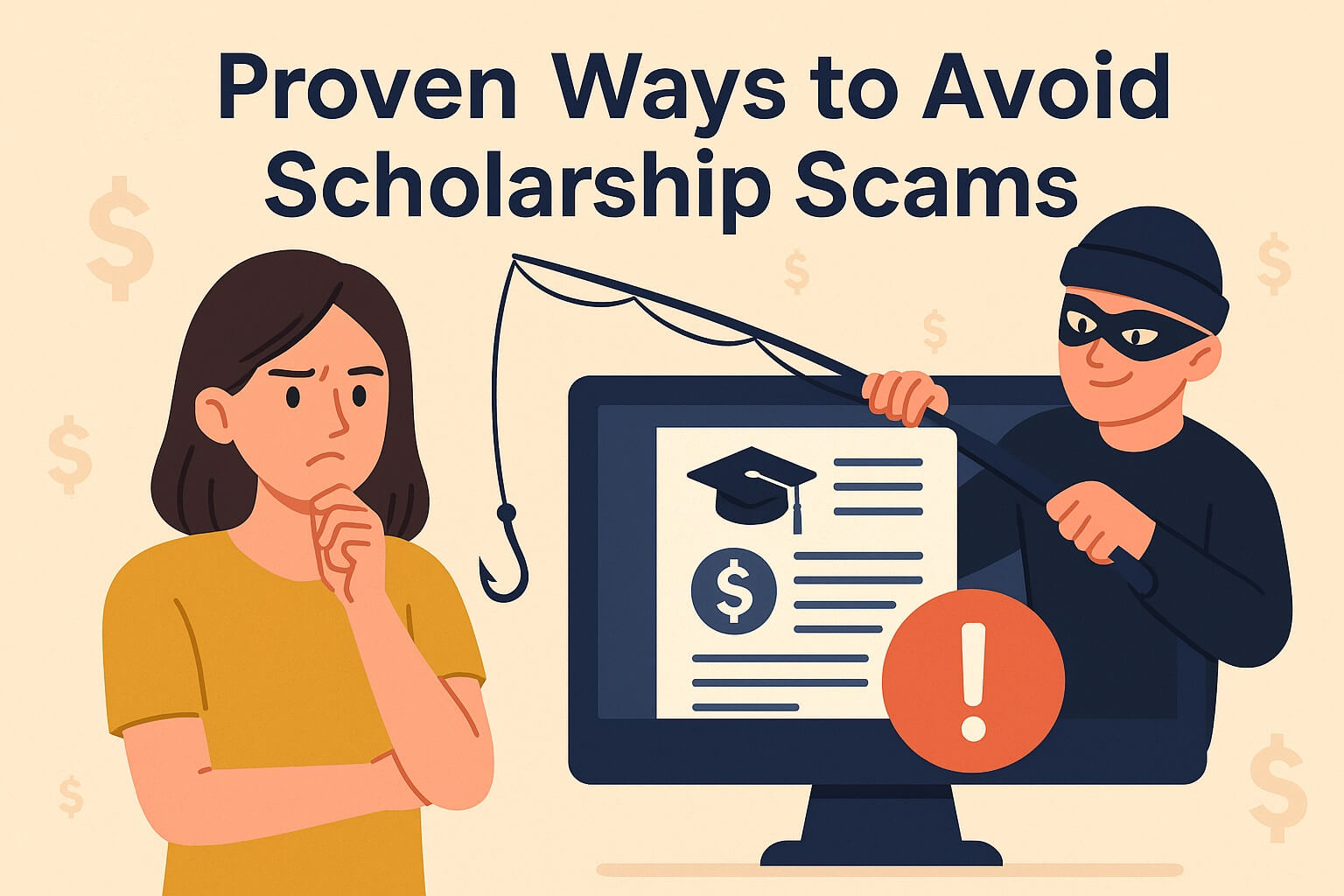

The pursuit of higher education is a transformative journey, offering pathways to personal growth and professional opportunities. For many, scholarships represent a vital bridge to achieving these aspirations, alleviating the often daunting financial burden of tuition, fees, and living expenses. However, the very hope and financial need that drive students to seek scholarships also make them attractive targets for unscrupulous individuals and organizations. Scholarship scams are a persistent and evolving threat, preying on optimism and urgency. Understanding the mechanics of these scams and adopting a vigilant approach is paramount for any student or family navigating the financial aid landscape.
At positivetraits.us, our commitment is to empower students with accurate information and reliable guidance on their scholarship journey. This comprehensive guide aims to illuminate the common pitfalls of scholarship scams, equip you with the knowledge to identify red flags, and provide actionable strategies for safeguarding your financial well-being and personal information.
The Irresistible Lure: Why Scholarships Are Prime Targets for Scammers
Scholarships, by their very nature, promise "free money" – funds that do not need to be repaid. This inherent appeal, combined with the often-complex and competitive application process, creates an environment ripe for exploitation. Scammers capitalize on several key factors:
- Financial Pressure: The rising cost of education leaves many students and families desperate for financial assistance. This desperation can cloud judgment, making individuals more susceptible to offers that seem too good to be true.
- Information Overload: The sheer volume of scholarship opportunities and application requirements can be overwhelming. Students, especially those new to the process, may struggle to differentiate legitimate opportunities from fraudulent ones.
- Lack of Awareness: Many students are simply unaware of the prevalence and sophistication of scholarship scams, making them easy targets for well-crafted deceptions.
- Desire for an "Easy Button": The rigorous application process for legitimate scholarships, often involving essays, recommendations, and academic transcripts, can be time-consuming. Scammers often promise shortcuts or guaranteed success, appealing to those seeking an easier path.
- Trust in Authority: Scammers frequently impersonate reputable organizations, government agencies, or well-known foundations, leveraging the perceived authority to gain trust.
The landscape of scholarship fraud is not new. For decades, consumer protection agencies like the Federal Trade Commission (FTC) have issued warnings about various forms of scholarship and financial aid scams. While the underlying tactics often remain consistent, the methods of delivery have evolved with technology, moving from mail and telephone solicitations to sophisticated email phishing campaigns, social media advertisements, and deceptive websites. Historical data indicates that consumers, including students, lose millions of dollars annually to various forms of fraud, with education-related scams forming a significant portion of this total. The average loss per victim can range from hundreds to thousands of dollars, not to mention the emotional toll and wasted time.
Common Tactics of Scholarship Scammers
Scammers employ a range of deceptive tactics, often designed to extract money or sensitive personal information. Recognizing these methods is the first step in prevention.
-
"Guaranteed" Scholarships or Success Fees:
This is perhaps the most classic scam. No legitimate scholarship provider or search service can "guarantee" you a scholarship. Scholarship awards are based on merit, need, specific criteria, and a competitive selection process. If an entity claims they can guarantee you a scholarship, especially in exchange for a fee, it’s a scam. They might promise to refund your money if you don’t receive an award, but these refunds rarely materialize. -
Application Fees for "Free" Money:
A fundamental principle of legitimate scholarships is that they are free money. You should never have to pay to apply for a scholarship. While some legitimate scholarship search services might charge a subscription fee for access to their database, these are distinct from direct scholarship applications. If an organization demands an "application fee," "processing fee," or "registration fee" to submit your scholarship application, it is almost certainly a scam. -
Requests for Personal Financial Information Too Early or Inappropriately:
Legitimate scholarship providers will require some personal information (name, address, academic history) for application and verification. However, they will rarely ask for highly sensitive financial details like your bank account number, credit card number, Social Security Number (SSN), or your parents’ financial account information during the initial application phase. This information is typically only required after you have been awarded a scholarship and need to arrange for fund disbursement, and even then, it should be handled through secure, verifiable channels, often directly with your university’s financial aid office. -
Phishing and Impersonation Scams:
Scammers often create fake websites or send emails that closely mimic those of legitimate organizations, universities, or government agencies (e.g., "Department of Education"). These phishing attempts aim to trick you into revealing login credentials or personal information. They might use official-looking logos, colors, and even slightly altered domain names (e.g., "scholarships-dept.org" instead of "scholarships.gov"). -
"Scholarship Matching Services" that Charge for Public Information:
Many legitimate, free scholarship search engines exist (e.g., College Board, Fastweb, Niche). Scammers often create "matching services" that charge a fee to provide you with a list of scholarships. The catch? The lists they provide often contain scholarships you could easily find yourself for free through legitimate search engines or by simply asking your high school counselor or university financial aid office. These services rarely offer any unique or exclusive opportunities. -
Advanced Fee Scams (Processing Fees, Tax Fees, Administrative Fees):
You receive notification that you’ve "won" a scholarship, but to claim the funds, you’re required to pay an upfront "processing fee," "tax fee," or "administrative fee." This is a classic advance-fee fraud. The scammer takes your payment and then disappears, and no scholarship funds ever materialize. Remember, scholarship awards are typically disbursed directly to your educational institution or sent as a check that requires no upfront payment. -
Fake Government or Foundation Scams:
Scammers might create fictitious government agencies or philanthropic foundations with impressive-sounding names. They might claim to be distributing funds from a little-known federal program or a wealthy donor’s estate. A quick search of the supposed organization’s name, especially alongside terms like "scam" or "fraud," can often reveal their true nature. -
Scholarship Contests/Sweepstakes with Hidden Agendas:
Some "scholarship contests" are thinly veiled attempts to collect personal data for marketing purposes or to enroll you in unwanted services. While legitimate contests exist, be wary of those that ask for an excessive amount of personal information, require you to purchase something, or seem to prioritize data collection over actual scholarship awarding. -
"Work-at-Home" or "Investment" Scams Tied to Scholarships:
A more elaborate scam might involve being "awarded" a scholarship, but the funds are contingent on you participating in a "work-at-home" scheme or making a small "investment" that promises high returns. These are almost always pyramid schemes or other fraudulent financial ventures, designed to separate you from your money, not provide you with educational funding.
Red Flags to Watch Out For
Beyond specific tactics, certain indicators should immediately raise suspicion. Train yourself to recognize these "red flags":
- Unsolicited Offers: You receive an email, phone call, or social media message about a scholarship you never applied for, especially if it’s from an unknown sender. While some legitimate organizations might reach out if your profile matches their criteria, extreme caution is warranted for unsolicited offers.
- Pressure to Act Immediately: Scammers often create a sense of urgency, insisting you must act "within 24 hours" or risk losing the scholarship. This tactic is designed to prevent you from doing due diligence and critical thinking.
- Requests for Payment (Any Kind of Fee): As established, legitimate scholarships do not require payment to apply or receive funds. Any request for an application fee, processing fee, tax fee, or "holding fee" is a major red flag.
- Grammar, Spelling, and Punctuation Errors: Professional and legitimate organizations maintain high standards for communication. Emails or websites riddled with obvious grammatical errors, misspellings, or awkward phrasing are strong indicators of a scam.
- Lack of Contact Information or Vague Details: The scholarship offer provides no clear contact information (physical address, verifiable phone number) or uses only a generic email address (e.g., Gmail, Yahoo). The details of the scholarship itself (eligibility, award amount, disbursement process) might be vague or inconsistent.
- Promises of Guaranteed Success or "Money Back" Guarantees: No legitimate scholarship provider or service can guarantee you will win an award.
- Requiring Credit Card or Bank Account Details for "Verification": Be extremely cautious if you are asked for your credit card number, bank account number, or Social Security Number merely to "verify" your identity or claim an award before the official disbursement process has begun through your institution.
- Offers that Seem Too Good to Be True: An offer of an incredibly large scholarship with minimal eligibility requirements or an unbelievably easy application process should always trigger skepticism.
- Generic Email Addresses: Communications from "[email protected]" or "[email protected]" are highly suspicious. Legitimate organizations use professional email addresses tied to their official domain (e.g., "[email protected]").
- Lack of a Verifiable Online Presence: A legitimate scholarship provider should have a professional, well-maintained website with clear information about their mission, history, and scholarship programs. A lack of such a presence, or a poorly designed, new website, is a warning sign.
How to Verify Scholarship Legitimacy: Applying E-E-A-T Principles
To navigate the scholarship landscape safely, it’s essential to adopt a rigorous approach to verifying any opportunity. This aligns perfectly with the E-E-A-T (Expertise, Experience, Authoritativeness, Trustworthiness) principles, emphasizing thorough investigation and reliance on credible sources.
1. Consult Official and Reputable Sources:
- High School Counselors and University Financial Aid Offices: These are invaluable resources. They often have lists of legitimate local and national scholarships, and they can offer advice on identifying scams.
- Government Websites: For federal student aid, always refer to official government websites (e.g., studentaid.gov in the U.S.). Be wary of sites that look similar but have slightly different URLs.
- Established Scholarship Search Engines: Reputable, free scholarship search engines (like College Board, Fastweb, Niche, or Sallie Mae’s Scholarship Search) vet their listings. While even these can sometimes have less-than-perfect listings, they are a much safer starting point than random emails or social media ads.
- The positivetraits.us blog: We are dedicated to providing vetted information and guidance on legitimate scholarship opportunities and processes, helping students differentiate real chances from scams.
2. Research the Organization Thoroughly:
- Official Website: Visit the organization’s official website. Does it look professional? Is the information clear, consistent, and up-to-date? Look for an "About Us" section, contact information, and clear details about their scholarship programs. Check the domain name carefully – scammers often use slightly altered URLs.
- Contact Information: Does the website list a physical address and a verifiable phone number? Call the number. Does it connect to a professional reception or an automated system that confirms the organization’s name?
- Online Search: Perform a comprehensive online search for the organization’s name along with terms like "scam," "fraud," "review," or "complaint." Check for news articles, consumer complaints, or warnings from consumer protection agencies.
- Better Business Bureau (BBB): Check if the organization has a rating with the Better Business Bureau. While not foolproof, a poor rating or a history of complaints is a significant red flag.
- Social Media Presence: Legitimate organizations usually have a professional social media presence. Scrutinize their profiles for signs of authenticity, engagement, and consistent messaging.
3. Verify Contact and Communication:
- Direct Contact: If you receive an unsolicited offer, do not use the contact information provided in the suspicious email or message. Instead, independently find the organization’s official contact information (from their verified website or a reputable directory) and reach out to them directly to inquire about the scholarship.
- Email Domain: Always check the sender’s email address. Does it match the organization’s official website domain? Be wary of generic email addresses or domains that are similar but not identical to the official one.
- Professionalism: Assess the overall professionalism of their communications. Are they well-written, clear, and free of errors?
4. Transparency and Clarity:
- Eligibility Criteria: Legitimate scholarships have clear, specific eligibility requirements. If the criteria are vague, overly broad, or seem too easy to meet for a large award, be suspicious.
- Application Process: The application process should be transparent and clearly outlined.
- Disbursement Process: How will the funds be disbursed? Will they be sent directly to your institution, or will you receive a check? If they suggest unusual disbursement methods or require upfront payments, exercise extreme caution.
5. Government Resources:
- Federal Trade Commission (FTC): The FTC is the primary consumer protection agency in the U.S. Their website (ftc.gov) has extensive information on various scams, including scholarship fraud, and allows you to report scams.
- State Consumer Protection Agencies: Your state’s Attorney General’s office or consumer protection division can also provide guidance and assist with reporting.
Protecting Your Personal Information
Beyond financial loss, scholarship scams often aim to steal your identity. Protecting your personal data is as crucial as protecting your money.
- Never Share Sensitive Information Prematurely: Be extremely cautious about sharing your Social Security Number, bank account details, or credit card information unless you are absolutely certain of the legitimacy of the request and the security of the platform.
- Use Secure Websites: When submitting any personal information online, ensure the website address begins with "https://" (indicating a secure connection) and look for a padlock icon in your browser’s address bar.
- Strong, Unique Passwords: Use strong, complex passwords for all your online accounts, and avoid reusing passwords across different sites. Consider using a password manager.
- Be Wary of Links and Attachments: Do not click on suspicious links or open attachments from unknown senders in emails or messages, as these can contain malware or lead to phishing sites.
- Monitor Financial Statements: Regularly review your bank and credit card statements for any unauthorized activity.
- Shred Sensitive Documents: Dispose of any documents containing personal information securely.
What to Do If You Suspect a Scam or Have Been Victimized
Immediate action is crucial if you encounter a potential scholarship scam or believe you have fallen victim:
- Stop All Contact: Cease all communication with the suspected scammer. Do not respond to their emails, calls, or messages.
- Do Not Pay: If you haven’t already, do not send any money or provide any personal financial information.
- Report the Scam:
- Federal Trade Commission (FTC): Report the scam to the FTC at ReportFraud.ftc.gov.
- Your State Attorney General: File a complaint with your state’s consumer protection office.
- Local Law Enforcement: If you’ve lost money or your identity has been compromised, file a police report.
- Your School: Inform your high school counselor or university financial aid office. They can warn other students and offer guidance.
- Email Provider/Social Media Platform: If the scam came via email or social media, report the account to the respective platform.
- Protect Your Identity: If you’ve shared sensitive information, consider placing a fraud alert on your credit reports with the three major credit bureaus (Equifax, Experian, TransUnion) and monitoring your credit closely.
- Alert Others: Share your experience with friends, family, and other students to prevent them from falling victim to similar scams.
The Imperative of Due Diligence
The journey to higher education is an investment of time, effort, and finances. While the prospect of securing scholarships is exciting, it demands a proactive and informed approach. Scholarship scams thrive on misinformation, urgency, and the hopes of students seeking financial relief. By understanding common scam tactics, recognizing red flags, and diligently verifying every opportunity through trusted channels, you empower yourself to make safe and informed decisions.
Remember, legitimate scholarship opportunities abound, and with careful research and vigilance, you can successfully navigate the scholarship landscape. The resources available at positivetraits.us are designed to support you in this endeavor, providing reliable information to help you achieve your educational goals without falling prey to fraud. Your education is too valuable to risk on a scam; protect it with knowledge and caution.