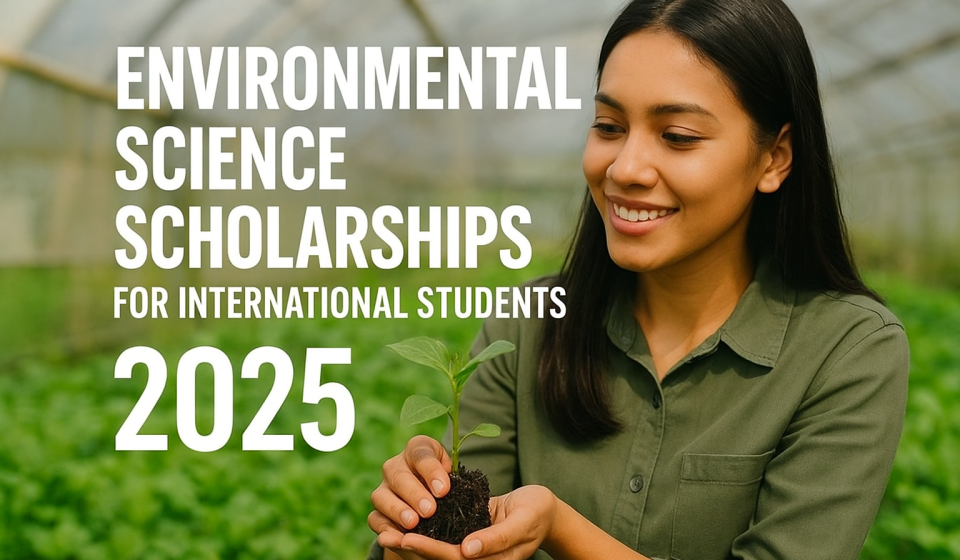

Imagine a world where the air is crisp, the water gleams with purity, and every creature thrives in harmony with its surroundings. Now, open your eyes to the reality: a planet grappling with climate change, pollution, and dwindling resources. It’s a stark contrast, isn’t it? Yet, within this challenge lies an immense opportunity – an urgent call for individuals with passion, knowledge, and an unwavering commitment to heal our Earth. Perhaps you hear that call. Perhaps you dream of a career dedicated to sustainability, conservation, or environmental justice. You envision yourself as an environmental scientist, a policy maker, an innovator in green technology, or a champion for wildlife. But then, a familiar hurdle appears: the cost of education. Tuition fees, living expenses, books – it can feel like a mountain too steep to climb. Don’t let that dream fade. This is where the powerful opportunity of a scholarship for environmental studies comes into play, acting as your crucial bridge to a greener tomorrow.
The pursuit of environmental studies isn’t just a career choice; it’s a commitment to our collective future. It’s about understanding complex ecological systems, developing sustainable solutions, and advocating for policies that protect our natural heritage. From battling plastic pollution in our oceans to designing renewable energy systems for our cities, the scope of environmental work is vast and ever-growing. As the urgency of global environmental issues intensifies, so does the demand for skilled professionals in fields like environmental science, sustainability, conservation, and climate change. Universities and research institutions are expanding their programs, and industries are desperate for experts who can navigate the complexities of environmental regulations and implement eco-friendly practices. This burgeoning need means there’s also a growing landscape of financial support specifically designed to cultivate the next generation of environmental leaders.
The World of Environmental Scholarships: A Guiding Light
So, what exactly is an environmental scholarship? At its core, it’s financial aid awarded to students pursuing degrees related to the environment, usually based on academic merit, demonstrated passion, financial need, or a combination thereof. Unlike loans, scholarships don’t need to be repaid, making them an incredibly valuable resource. They represent an investment by organizations, foundations, and individuals who believe in the critical importance of environmental education and the potential of students like you to make a tangible difference. These aren’t just for the straight-A students; many scholarships look for commitment, leadership potential, unique experiences, or even a specific research interest.
The sources of these scholarships are incredibly diverse. You might find opportunities directly from universities eager to attract top talent to their environmental engineering or green technology programs. Non-governmental organizations (NGOs) focused on wildlife conservation or climate advocacy often offer funding to students whose research aligns with their mission. Government agencies, both federal and state, frequently provide grants and scholarships to foster expertise in areas vital to public interest, such as environmental policy funding or renewable energy research. And then there are countless private foundations and individual philanthropists who simply want to empower individuals to contribute positively to the planet. Understanding this varied landscape is your first step in unlocking these opportunities.
Types of Environmental Studies Scholarships You Can Find
Navigating the scholarship world can feel overwhelming, but breaking it down by type makes it much clearer. Whether you’re just starting your academic journey or aiming for advanced degrees, there’s likely a scholarship tailored for you.
-
Undergraduate Environmental Scholarships: For those embarking on their bachelor’s degree in fields like environmental studies, ecology, earth sciences, or sustainable development. These often focus on high school academic performance, community involvement, and essays demonstrating a genuine interest in environmental issues. Many universities offer their own internal scholarships for incoming freshmen. Look for "freshman environmental scholarships" or "undergraduate sustainability aid."
-
Graduate Environmental Scholarships: If you’re planning a Master’s or Ph.D. in areas like environmental management, policy analysis, conservation biology, or renewable energy systems, these scholarships are essential. They often require strong academic records from your undergraduate studies, compelling research proposals, and significant letters of recommendation. You’ll find many fully funded environmental programs at the graduate level, where tuition, and sometimes even a stipend, are covered in exchange for research or teaching assistantships. These are particularly sought after.
-
Specific Focus Scholarships: This is where the environmental scholarship landscape truly shines, catering to niche interests and specializations.
- Environmental Science Scholarships: Perfect for students delving into the scientific aspects of environmental problems, from toxicology to atmospheric science.
- Sustainability Scholarships: For those focused on creating systems and practices that meet present needs without compromising future generations. This could involve sustainable agriculture, urban planning, or corporate social responsibility.
- Conservation Scholarships: Aimed at students dedicated to protecting biodiversity, managing natural resources, and preserving ecosystems. Think wildlife biology, park management, or forestry.
- Climate Change Scholarships: Crucial for students researching climate modeling, adaptation strategies, mitigation technologies, or climate policy.
- Green Technology Scholarships: For innovators developing new technologies for renewable energy, waste management, or pollution control. This includes students in environmental engineering scholarships.
- Environmental Policy Funding: Designed for future policymakers, lawyers, and advocates who will shape environmental legislation and regulations.
- Renewable Energy Scholarships: Specifically for those pursuing careers in solar, wind, geothermal, or hydropower.
- Wildlife Conservation Scholarships: A subset of conservation, focusing intensely on animal species and their habitats.
- Environmental Engineering Scholarships: Supporting students who apply engineering principles to environmental protection, such as water treatment, air quality control, or hazardous waste management.
-
Fully Funded Environmental Programs: As mentioned, these are the gold standard, often found at the graduate level. They typically combine scholarships with assistantships (teaching or research) that cover tuition and provide a living stipend. They are highly competitive but can completely remove the financial barrier to advanced study.
-
International Environmental Scholarships: For students looking to study abroad or for international students aiming to study environmental topics in countries like the U.S. These scholarships often emphasize global perspectives on environmental issues and fostering international collaboration. If you’re a U.S. student wanting to make a global impact, searching for "international environmental scholarships" can open up exciting opportunities.
Unlocking Your Potential: Crafting a Winning Application
Securing a scholarship for environmental studies isn’t just about finding the right opportunity; it’s about presenting yourself as the ideal candidate. This isn’t a passive process; it’s an active campaign to showcase your passion and potential.
-
Start Early, Stay Organized: Scholarship hunting is a marathon, not a sprint. Begin researching opportunities months, even a year, before your application deadlines. Create a spreadsheet to track application requirements, deadlines, contact information, and your progress. This will prevent last-minute panic and ensure you submit polished applications.
-
Research, Research, Research: Don’t just apply to every scholarship you see. Carefully read the eligibility criteria and the mission statement of the awarding organization. Does your academic background align? Does your career aspiration resonate with their goals? A scholarship for wildlife conservation might not be the best fit if your primary interest is green technology. Tailoring your applications to scholarships that genuinely fit your profile will significantly increase your chances. Look at university websites, environmental organizations (e.g., Sierra Club, Environmental Defense Fund), professional associations (e.g., National Association of Environmental Professionals), and online scholarship databases. Don’t forget to check for "how to get environmental scholarships" guides online; many provide valuable insights.
-
Show Your Passion and Purpose (The Essay is Key!): This is arguably the most critical component. Scholarship committees aren’t just looking for good grades; they’re looking for individuals who are genuinely driven to make a difference. Your essay or personal statement is your chance to tell your story.
- What ignited your interest in environmental studies? Was it a childhood experience, a documentary, a local issue?
- What specific environmental problems do you care most about?
- How will your chosen field of study (e.g., environmental science, sustainability, climate change) equip you to address these problems?
- What are your long-term career goals? Do you envision yourself working in environmental policy funding, developing renewable energy solutions, or leading a conservation project?
- Be authentic, tell a compelling story, and let your unique voice shine through. Avoid generic statements; instead, offer specific examples of your experiences, observations, and aspirations.
-
Academic Excellence & Beyond: While not the only factor, a strong academic record is undeniably helpful. Maintain good grades, especially in science, math, and environmental-related courses. However, committees also look beyond the classroom.
- Extracurricular Activities: Participation in environmental clubs, science fairs, or debate teams demonstrates commitment and leadership.
- Volunteer Work: Dedicate time to local conservation efforts, community clean-ups, or environmental advocacy groups. This shows proactive engagement.
- Internships: Even unpaid internships in environmental organizations or labs can provide invaluable experience and demonstrate your seriousness. Highlight these experiences, showing how they’ve shaped your understanding and commitment to environmental causes.
-
Strong Letters of Recommendation: Choose recommenders who know you well and can speak genuinely about your character, work ethic, and potential. Ideally, these would be professors, mentors, or supervisors from environmental projects or volunteer work. Provide them with your resume, your personal statement, and details about the scholarship so they can write a targeted and impactful letter. Give them plenty of lead time!
-
Polishing Your Resume/CV: Your resume should clearly highlight all relevant academic achievements, work experience, volunteer roles, and skills. Tailor it for each scholarship application, emphasizing experiences that align with the scholarship’s focus. If you’ve contributed to a research project on green technology or helped organize a sustainability initiative, make sure it stands out.
-
The Interview (if applicable): Some competitive scholarships include an interview stage. Prepare by researching the organization, understanding current environmental issues, and articulating your passion and goals clearly and confidently. Practice answering common interview questions and be ready to discuss your essay and experiences in detail.
Beyond the Scholarship: What Comes Next?
Receiving a scholarship for environmental studies is more than just financial relief; it’s an affirmation of your potential and an entry point into a vibrant community. It opens doors to:
- Networking Opportunities: Scholarship recipients often gain access to exclusive events, mentorship programs, and a network of fellow scholars and environmental professionals. These connections can be invaluable for future internships, job prospects, and collaborative projects in areas like environmental science or renewable energy.
- Enhanced Academic Focus: With financial worries reduced, you can fully immerse yourself in your studies, research, and extracurricular activities. This allows for deeper learning and greater personal growth.
- Career Advancement: A scholarship on your resume signals dedication and achievement to future employers. It shows that others have invested in your potential, making you a more attractive candidate for roles in conservation, climate change policy, or environmental engineering.
The career paths available to environmental studies graduates are incredibly diverse and impactful. You could find yourself:
- Working as an environmental scientist analyzing data to inform policy.
- Developing green technology solutions for corporations.
- Advocating for environmental policy funding in Washington D.C.
- Managing protected areas as a wildlife conservationist.
- Designing sustainable infrastructure as an environmental engineer.
- Educating communities about sustainability practices.
- Researching solutions to climate change.
Every single one of these roles is vital for building the greener, healthier future we all aspire to.
Stories of Impact
Consider the story of Sarah, who dreamed of studying marine biology but faced daunting tuition costs. An undergraduate environmental scholarship from a foundation dedicated to ocean conservation allowed her to pursue her passion. During her studies, she discovered a new species of algae, contributing to crucial environmental science research. Today, she’s a lead researcher on a project combating plastic pollution, a direct result of the financial freedom her scholarship provided.
Or take Michael, an aspiring environmental engineer from a modest background. A fully funded environmental program for his master’s degree not only covered his tuition but also provided a stipend, enabling him to focus entirely on his thesis project: designing an innovative wastewater treatment system using sustainable materials. His work is now being piloted in several communities, making a real impact on water quality and demonstrating the power of green technology.
These aren’t just fictional tales; they represent countless individuals whose journeys were made possible by the generosity and foresight of scholarship providers. They underscore the profound impact that a single scholarship for environmental studies can have, not just on an individual, but on the planet itself.
Your Journey Begins Now: Taking the First Step
If you’re reading this, chances are you already possess the most important ingredient: a desire to make a difference. Don’t let financial barriers stand in your way. The world desperately needs your intellect, your passion, and your commitment to environmental stewardship.
Start exploring. Visit university financial aid pages. Search online databases using keywords like "environmental science scholarships," "sustainability scholarships," "conservation scholarships," "climate change scholarships," and "environmental career funding." Reach out to professors in your desired field – they often know about specific opportunities. Network with environmental professionals. Every conversation, every search, every application is a step forward.
The path to a greener tomorrow is being paved by dedicated individuals like you. With the right scholarship for environmental studies, you can not only overcome financial obstacles but also amplify your potential to contribute meaningfully to solving the most pressing challenges of our time. Your dream of protecting the planet is not just a personal aspiration; it’s a global imperative. Let a scholarship be the wind beneath your wings, lifting you towards a future where you can truly thrive and help our Earth heal. The future is waiting, and it needs your green vision. Go forth and find your scholarship.