
I remember sitting there, a mug of cold coffee beside me, staring at a blank screen. The cursor blinked, taunting me. Another scholarship application. Another essay prompt. It felt like an impossible wall between me and my dreams of higher education. My grades were decent, my extracurriculars fine, but these essays? They were the wild card, the one thing I couldn’t just study for. If you’re feeling that familiar dread right now, believe me, I’ve been in that exact spot. I’ve navigated the confusing labyrinth of scholarship essay writing, made my share of mistakes, and thankfully, found my way out with a few awards in hand. Let me tell you how I learned to turn those intimidating prompts into powerful stories.
When I first started, I thought a scholarship essay was just another school assignment. You know, write something formal, use big words, sound smart. Oh, how wrong I was! What I quickly realized, after countless rejections and a few heartbreaking near-misses, was that these essays weren’t about showing off how smart I was. They were about showing who I was. They were a chance to step out from behind the numbers on my transcript and introduce myself as a real person with dreams, struggles, and a unique perspective. The committee wasn’t just looking for good grades; they were looking for a good investment, a person they believed would make the most of their generosity, someone who truly needed and deserved that chance. This understanding became my guiding star in the world of winning scholarship essays.
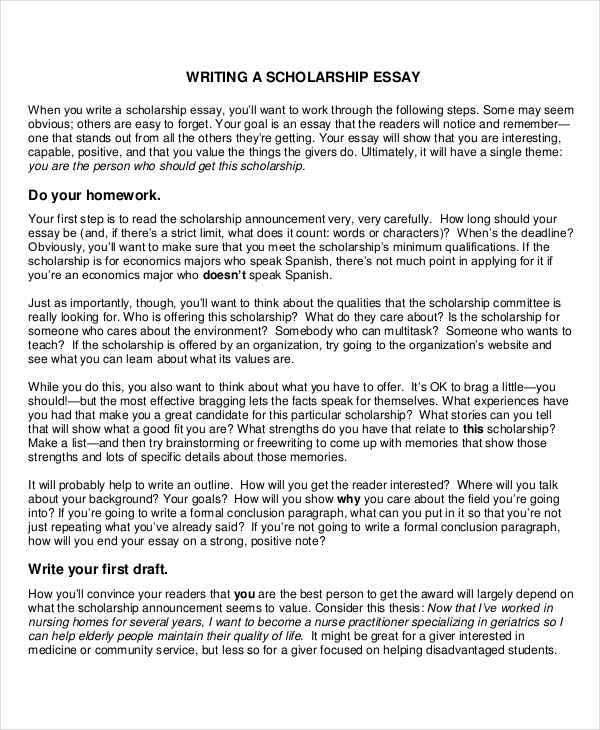
The first crucial step, and one I often rushed, was understanding the prompt. It sounds simple, right? Just read the question. But trust me, there’s an art to it. I’d skim, pick out a few keywords, and immediately start thinking of stories. Big mistake. One time, a prompt asked, "Describe a significant challenge you’ve overcome and what you learned from it." My first thought was to write about a difficult exam I aced. It was a challenge, sure, but what did I really learn beyond studying harder? Not much depth there. I learned to break down every single word in the prompt. "Significant challenge" implies something truly impactful, not just an everyday hurdle. "Overcome" means a journey, a struggle, and a resolution. "What you learned" is the most important part – the reflection, the growth. It’s not just about the event, but what the event did to you and for you. I began to circle keywords, underline verbs, and ask myself, "What is the real question behind these words?" This careful deconstruction became my foundation for crafting scholarship essays that stand out.
Once I understood the prompt, the real work began: brainstorming. This felt like digging for treasure in my own mind. I’d sit with a pen and paper – sometimes I preferred a screen, but often the physical act of writing helped me – and just dump every idea that came to mind. No filtering, no judgment, just a stream of consciousness. For the "significant challenge" prompt, I stopped thinking about exams and started thinking about life. That time my family had to move unexpectedly and I had to switch schools mid-year. The struggle of adapting, making new friends, finding my place. Or the time I volunteered at a local shelter and faced situations that truly tested my empathy. Or even a personal struggle, like overcoming shyness to lead a project. These were real challenges, with real lessons.
I learned to ask myself guiding questions during this brainstorming phase:
- What moments in my life truly shaped me?
- What am I passionate about?
- What skills have I developed, and how did I develop them?
- What obstacles have I faced, and how did I push through them?
- What do I dream about for the future, and why?
- How have I contributed to my community or school?
The goal wasn’t just to list achievements, but to find the stories behind those achievements. It’s not enough to say, "I volunteered at the food bank." It’s about the person you met there, the conversation you had, the feeling of making a difference, or even the moment you realized how much more there was to learn about food insecurity. These details are the heart of your personal statement for scholarship.
After I had a messy collection of ideas, I’d pick the one that felt strongest, the one that resonated most with the prompt and truly represented a part of me. This is where the magic of "show, don’t just tell" comes in. This phrase became my mantra. Instead of writing, "I am a determined person," I would tell a story that showed my determination. For example, when writing about leading a school project, I wouldn’t just state, "I demonstrated leadership skills." Instead, I’d describe the chaos of a disorganized team, the late nights I spent coordinating, the specific conflict I mediated, and the ultimate success we achieved. I’d paint a picture with words: "The air in the classroom was thick with frustration as our project deadline loomed. Papers lay scattered, ideas clashed like cymbals, and no one seemed to agree on a direction. I felt a knot tighten in my stomach, but instead of retreating, I took a deep breath, grabbed a whiteboard marker, and began to outline a clear path forward, listening intently to everyone’s concerns before suggesting a compromise." See the difference? That’s what makes your scholarship essay examples shine.
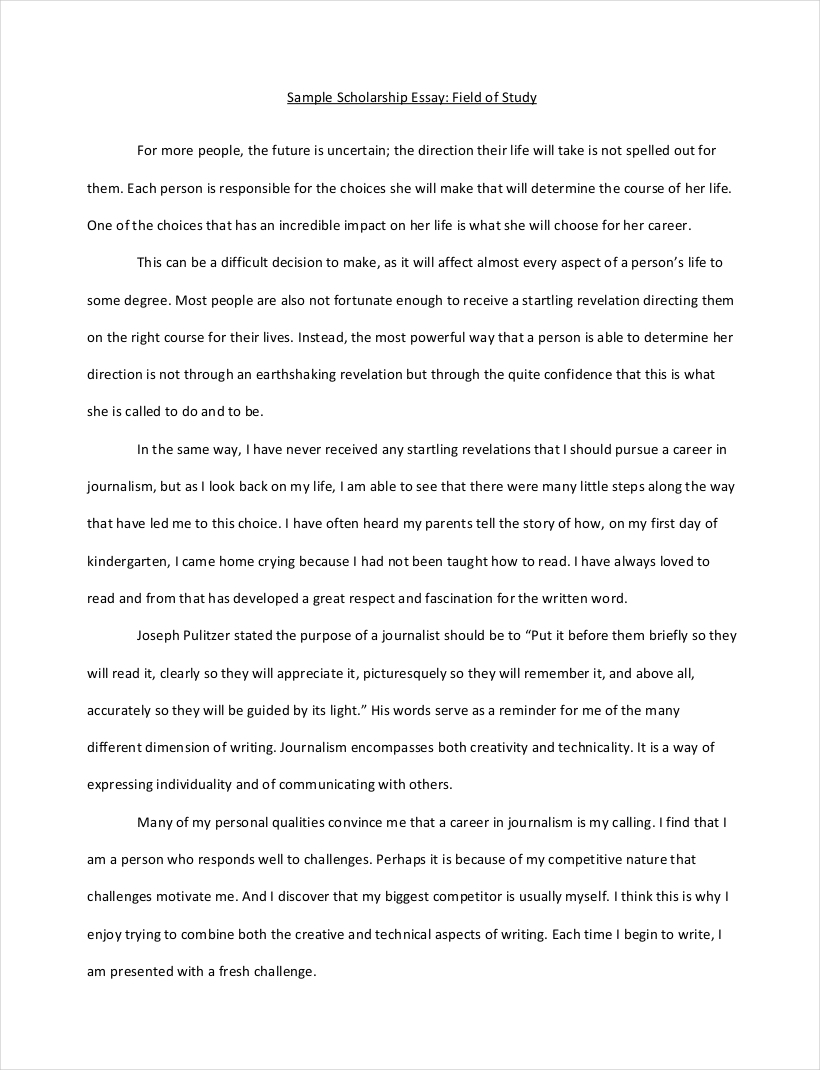
Every good story needs a beginning, a middle, and an end. The beginning, your introduction, is crucial. It’s your hook. It needs to grab the reader’s attention immediately and make them want to keep reading. I tried various approaches: a vivid anecdote, a surprising statement, a thought-provoking question related to the prompt. For that "challenge" essay, I might start with the moment of confusion and fear when I first heard we were moving, rather than just stating, "Moving was a challenge." The middle is where you develop your narrative, introduce the conflict or situation, describe your actions, and delve into your thoughts and feelings. The end is your resolution, your reflection. What did you learn? How did you grow? How will this experience shape your future endeavors or your contributions to the scholarship’s mission? This reflection is key for any essay writing for scholarships.
Authenticity became my North Star. Committees can smell a fake a mile away. Don’t try to be someone you’re not, or write what you think they want to hear. Write what is true to you. If you genuinely struggled with something, admit it. Vulnerability, when paired with growth and learning, can be incredibly powerful. It makes you human, relatable. My early essays often felt stiff and formal, like I was trying to impress an English teacher. But the essays that won were the ones where my true voice came through, where I wasn’t afraid to share a personal moment, a moment of doubt, or a moment of triumph.
Let’s talk about some common scholarship essay prompts I encountered and how I approached them:
- "Why do you deserve this scholarship?" or "How will this scholarship help you achieve your goals?" This isn’t a plea for money. It’s about demonstrating alignment. Research the organization offering the scholarship. What are their values? What kind of students do they support? Then, connect your story to their mission. If they support students pursuing STEM, talk about your passion for science, a specific project you worked on, or a challenge you want to solve in that field. Explain specifically how the funds will enable you to pursue your education, not just generally. Maybe it means you can focus more on your studies instead of working extra hours, or afford specific materials for a project.
- "Describe your leadership experience." Again, show, don’t tell. Don’t just list titles like "President of the Debate Club." Describe a time you had to make a tough decision as a leader, mediated a conflict, motivated a discouraged team, or innovated a new approach. What did you learn about leadership from that experience? Was it about empowering others, delegating, or taking initiative?
- "What are your future goals?" Be specific and passionate. Don’t just say, "I want to help people." How? In what field? What specific problems do you want to address? And crucially, why? What personal experiences led you to these goals? Connect your past experiences to your future aspirations, showing a clear, motivated path. This demonstrates foresight and dedication.
The technical stuff, while less glamorous, is equally vital. Grammar, spelling, and punctuation are non-negotiable. A brilliant story can be undermined by careless errors. I learned this the hard way with a few embarrassing typos in early drafts. Now, I always read my essays aloud. It’s amazing how your ear catches awkward phrasing or missing words that your eyes might glide over. I also developed a habit of using online grammar checkers as a first pass, but always following up with a manual proofread. Remember, these are tools, not substitutes for your own careful review.
Word count limits are another challenge. If an essay asks for 500 words, don’t write 501. And certainly don’t write 300. Committees often have thousands of essays to read, and adhering to guidelines shows you can follow instructions and respect their time. This means ruthless editing. Every sentence must earn its place. Cut out filler words, redundant phrases, and anything that doesn’t advance your narrative or strengthen your point. Sometimes, cutting a paragraph actually makes the essay stronger and more impactful.
Then comes the revision process, which is often where the real magic happens. Your first draft is rarely your best. It’s just getting your thoughts onto paper. My process looked something like this:
- Write the first draft: Just get it all out. Don’t worry about perfection.
- Step away: Put it down for a few hours, or even a day. Get some distance.
- Read with fresh eyes: Come back and read it as if you’re the scholarship committee member. Is it engaging? Does it answer the prompt fully? Is my voice clear?
- Seek feedback: This is huge. Ask a trusted teacher, mentor, or even a friend who is a strong writer to read it. Ask them specific questions: "Is my main point clear?" "Does this part make sense?" "Is there anything confusing?" I remember one time, my English teacher pointed out that my essay about overcoming shyness felt a little too vague. She pushed me to include more specific examples of my internal struggles and the small, deliberate steps I took. That feedback transformed a decent essay into a powerful one. Be open to constructive criticism; it’s not a judgment on you, but an opportunity to improve.
- Refine and polish: Address the feedback, tighten your prose, check for flow and coherence. Ensure smooth transitions between paragraphs. Does each paragraph logically lead to the next?
One common mistake I saw others make, and sometimes made myself, was trying to cram too many accomplishments into one essay. It’s tempting, when you want to impress, to list every award and every club. But a scholarship essay isn’t a resume. It’s a story. Focus on one or two key experiences that best illustrate the qualities the prompt is looking for, and delve deep into those. A single, well-told story is far more impactful than a shallow list of achievements.
Finally, remember the bigger picture. The scholarship essay is a significant piece of your application, but it’s part of a whole. Make sure it complements your other application materials, rather than contradicting them. And always, always double-check the submission instructions. Do they want it uploaded as a PDF? Pasted into a text box? Do they require a specific font or formatting? Missing these small details can sometimes be as detrimental as a poorly written essay.
So, after all that, what’s the takeaway? Don’t view the scholarship essay as a hurdle. See it as an incredible opportunity. It’s your chance to tell your unique story, to articulate your passions, and to connect with the scholarship committee on a personal level. It’s your voice, echoing from the page, reaching out to someone who holds the key to your educational future. Embrace the process, be patient with yourself, and most importantly, be authentically you. Your journey, your struggles, your triumphs – they are all valuable. Learn to articulate them clearly, passionately, and thoughtfully. When you do, you won’t just be writing an essay; you’ll be building a bridge to your dreams. Good luck, and may your pen be mighty!