
I remember it like it was yesterday, the overwhelming weight of ambition pressing down on me. I stood at the precipice of a dream, a university education, but between me and that dream was a chasm, wide and intimidating, filled with dollar signs. Tuition fees, living expenses, books – it all seemed like an insurmountable mountain of money. My family, bless their hearts, had always encouraged my aspirations, but the financial reality was stark. We didn’t have a trust fund; we had grit and hope, neither of which paid for textbooks. For a long time, I felt stuck, caught between the desire for knowledge and the harsh practicalities of life.
I spent countless nights staring at my ceiling, replaying conversations with friends who were already accepted into their dream schools, casually discussing financial aid packages or parents who were footing the bill. I felt a pang of envy, not for their money, but for their freedom from this particular worry. I knew I was smart, I worked hard, but what good was that if the gatekeepers to higher education demanded a ransom I couldn’t pay?
Then, one evening, while browsing a forum dedicated to student life, I stumbled upon a comment that would change everything. Someone had casually mentioned "scholarship databases." The phrase itself sounded a bit dry, technical even, but the context made my ears perk up: "It’s how I found almost all my funding!" My heart did a little flutter. Could it be? Was there a secret map to this treasure hunt I hadn’t known about?
Until then, my scholarship search had been a haphazard affair. I’d typed vague phrases into search engines, scrolled through endless lists on university websites, and even checked bulletin boards at local community centers. It was like trying to find a specific grain of sand on a vast beach, without knowing what that grain looked like, or even if it existed. The process was exhausting, disheartening, and mostly fruitless. I’d applied for a handful of things I’d found by sheer luck, but the rejections always felt like a confirmation of my initial fear: this path wasn’t for me.
The idea of a "database" for scholarships clicked something into place. A database implied organization, structure, a way to filter through the noise. It promised a system where my scattered efforts could become focused and efficient. It was a lifeline in an ocean of uncertainty.
My first foray into a scholarship database was tentative. I picked one of the more popular ones that had been mentioned in that forum. The website loaded, presenting me with a form. "Create your profile," it urged. I hesitated, thinking of all the personal information I’d have to put in. But then, I remembered the mountain of debt, the unfulfilled dream. I took a deep breath and started typing.
It asked for everything: my academic interests, my GPA, my extracurricular activities, my volunteer work, my family’s income, my ethnic background, my future career aspirations, even my hobbies. At first, it felt intrusive, like a very nosy stranger. But as I filled it out, a different feeling began to emerge. Each piece of information I entered was a keyword, a filter, a way for this digital matchmaker to connect me with opportunities I would never have found otherwise.
The magic truly began when I hit the "Search" button for the first time. Instead of a generic list of thousands, it presented me with a curated selection. These weren’t just random scholarships; these were scholarships that matched my profile. Scholarships for students interested in environmental science (my major!), scholarships for first-generation college students (that’s me!), scholarships for volunteers in local community programs (I’d spent years at the animal shelter!). It was like the database had peered into my soul and understood exactly what I needed.
I spent hours on that first day, just exploring. I learned about different types of scholarships I hadn’t even known existed. There were merit-based scholarships, which I had vaguely heard of, rewarding academic excellence. But then there were need-based scholarships, designed to help students from lower-income backgrounds. And the niche ones! Scholarships for left-handed students, scholarships for aspiring poets, scholarships for people who loved a particular sport, scholarships based on your ancestry, even scholarships for creating unique prom outfits! It was a revelation. It wasn’t just about being the "best" in some conventional sense; it was about being you, and finding someone out there willing to invest in your unique story.
The databases also offered tools to organize my search. I could save scholarships that interested me, mark ones I’d applied for, and even set reminders for deadlines. This was crucial because before, I’d been scribbling notes on random scraps of paper, losing track of what I’d applied to and when. Now, it was all in one place, a digital command center for my financial future.
Of course, it wasn’t all smooth sailing. The internet, while a powerful tool, is also a wild place. Early on, I encountered a few "scholarships" that seemed too good to be true. They promised huge sums for minimal effort, often asking for an application fee or my bank details upfront. My gut screamed "scam," and a quick search confirmed my suspicions. This taught me a valuable lesson: scholarship databases are a gateway, but vigilance is always necessary. Reputable databases, I learned, would never host scholarships that asked for money from applicants. They were there to connect students with legitimate funding, not to facilitate scams. I quickly learned to stick to well-known, reputable platforms and to always double-check any suspicious-looking opportunity.
The true beauty of scholarship databases, I realized, was that they demystified the entire process. They took away the guesswork and the aimless wandering. They transformed a daunting, seemingly impossible task into a structured, manageable project. Instead of feeling overwhelmed, I felt empowered. Every time I refined my search, every time I discovered a new opportunity tailored to my experiences, I felt a surge of hope.
Based on my own journey, if you’re standing where I once was, staring at that financial chasm, here are some things I learned that I hope can help you too:
1. Start Early, Like, Yesterday: The sooner you begin, the more opportunities you’ll find and the more time you’ll have to craft compelling applications. Many deadlines are surprisingly early, sometimes even a year before you plan to attend college. Don’t wait until the last minute.
2. Build a Robust Profile: Think of your profile on these databases as your digital resume for scholarships. The more detailed and accurate it is, the better the matches you’ll get. Don’t skip questions. Include every award, every volunteer hour, every club, every interest. You never know which small detail might unlock a unique scholarship.
3. Keywords Are Your Best Friends: Beyond your profile, when you’re doing manual searches, think broadly. Don’t just search for "science scholarship." Try "women in STEM scholarship," "first-generation college student scholarship," "scholarship for volunteers," "scholarship for XYZ hobby," "scholarship for residents of ." The more specific you get, the less competition you might face.
4. Don’t Discount the Small Ones: Everyone wants the $10,000 or $20,000 scholarship. And while those are fantastic, they’re also highly competitive. Don’t overlook the $500 or $1,000 scholarships. A handful of these can quickly add up to a substantial amount, often with less competition. Every dollar counts!
5. Apply Even if You Don’t Meet Every Single Criterion (Within Reason): Sometimes, a scholarship might list a GPA requirement of 3.5, and you have a 3.4. If you have other strong qualifications that make you a great candidate, consider applying anyway. Scholarship committees sometimes have discretion, especially if you write a compelling essay. However, if they say "must be a resident of Alaska" and you live in Florida, that’s probably a hard no. Use your judgment.
6. Personalize Your Essays, Always: This is where you truly shine. Don’t use a generic essay for every application. Tailor each essay to the specific scholarship and its mission. Research the organization offering the scholarship and weave their values into your story. Show them why you are the perfect fit for their funding. Let your unique voice and experiences come through.
7. Proofread, Proofread, Proofread: A sloppy application full of typos and grammatical errors signals a lack of attention to detail and professionalism. Have friends, family, or teachers read your essays. Use grammar checkers. A polished application stands out.
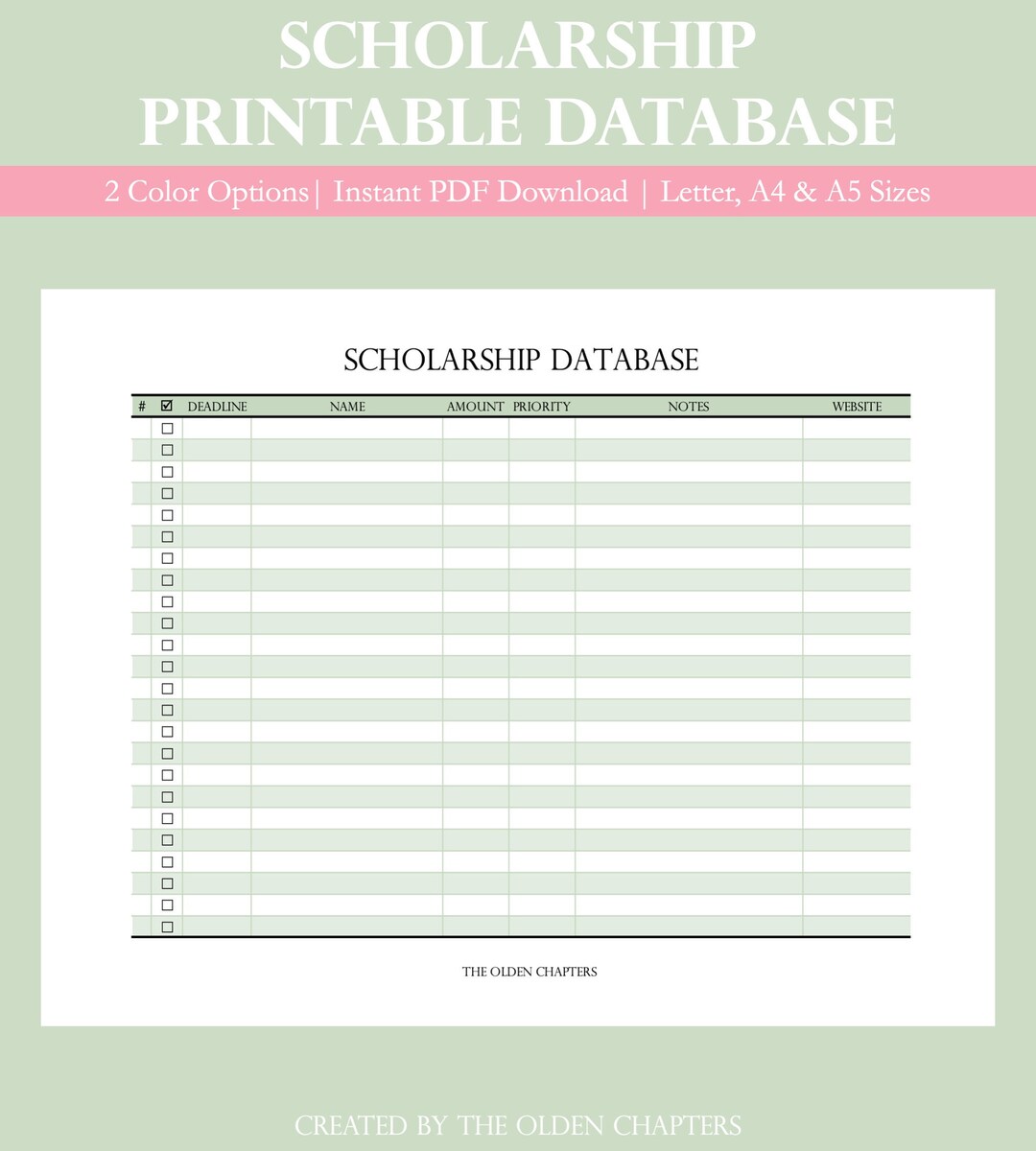
8. Keep Meticulous Records: Use a spreadsheet to track every scholarship you apply for: the name, the organization, the deadline, the requirements, the date you applied, and the status (pending, rejected, accepted). This keeps you organized and prevents you from missing deadlines or duplicating efforts.
9. Persistence is Key: You will face rejection. It’s part of the process. Don’t let it discourage you. For every "no," there’s a potential "yes" waiting. Keep applying. Keep refining your essays. Learn from each application.
10. Tell Your Story Honestly and Passionately: Scholarship committees aren’t just looking for good grades; they’re looking for individuals with potential, with unique perspectives, with a drive to make a difference. Your essay is your chance to tell them who you are, what motivates you, and how their investment in you will pay dividends. Be authentic. Be vulnerable. Let your passion shine.
I remember the day the first acceptance letter arrived. It wasn’t the biggest scholarship, but it was mine. It validated all the late nights, all the hours spent meticulously filling out forms and writing essays. Then another came, and another. Slowly but surely, the pieces of the financial puzzle started to come together. The mountain of money began to shrink, replaced by a clear path forward.
Using scholarship databases didn’t just help me pay for college; it taught me resilience, organizational skills, and the power of targeted effort. It showed me that resources exist for those who are willing to seek them out, and that often, the biggest barrier is simply not knowing where to look.
So, if you’re a beginner, feeling lost in the vast landscape of higher education funding, take heart. These databases are your compass, your map, and your guide. They were for me. They transformed my impossible dream into a tangible reality. They allowed me to pursue my education, to learn, to grow, and to eventually contribute to the world in ways I never thought possible when I was just staring at that ceiling, wondering how I’d ever get there. Your journey might feel daunting now, but with these tools and a little persistence, you too can find your way to funding your future. Start exploring today. Your scholarship is out there, waiting to be found.