It feels like just yesterday I was sitting at my kitchen table, a stack of blank papers before me, staring at a computer screen that glowed with a single, daunting phrase: "Write an essay about yourself." My heart would pound, my mind would race, and often, my hands would just… freeze. The idea of college, of a future I dreamed of, felt so close yet so impossibly far, mostly because of one massive hurdle: money. That’s where the scholarship essay came in, a mysterious gatekeeper to a world of opportunity. And let me tell you, for a long time, I had no clue how to unlock that gate.
Many students, just like the younger me, see scholarship essays as another tedious chore, a hoop to jump through. They might think it’s all about perfect grades or a long list of extracurriculars. But over the years, after writing my share of these essays, and even getting a peek behind the curtain at how some committees make their decisions, I’ve learned something truly profound: a scholarship essay isn’t just a requirement; it’s your golden ticket to truly being seen. It’s your chance to step out from behind the numbers on your transcript and show them the real, breathing, dreaming human you are.
I remember one particular essay prompt that asked, "Describe a significant challenge you’ve overcome." My first instinct was to write about the time I broke my arm right before a big soccer game. It was a challenge, sure, but as I started writing, it felt… flat. It didn’t really say anything about me. It was just an event. I crumpled the paper and started over, thinking, "What has truly shaped me? What taught me something deep?" That’s when I started to think differently about scholarship essay examples. It wasn’t about the event itself, but about the transformation that occurred because of it.
So, let’s talk about what truly makes a scholarship essay sing, drawing from the experiences I’ve had, the advice I’ve given, and the stories I’ve heard that actually made a difference. Forget the stiff, formal language you might think you need. Imagine you’re sitting across from a kind, curious person, telling them why you deserve this chance.
Beyond the Resume: Unveiling Your True Self
Most scholarship committees have your grades, your test scores, and your list of activities. They already know you’re smart and involved. What they don’t know is your spirit, your drive, your unique way of seeing the world. This is where your scholarship essay comes in. It’s the space to tell the story behind those achievements, or even the story that explains why your achievements might not be as shiny as someone else’s, but your heart and ambition are just as strong.
Take the classic "Tell us about yourself" prompt. My initial thought for this kind of scholarship essay example was always to list everything good I’d ever done. "I’m a straight-A student, I play violin, I volunteer…" Yawn. Even I found it boring. What I learned is that this prompt isn’t asking for a chronological summary of your life. It’s asking for a snapshot of who you are at your core, what drives you, what makes you unique.
Instead of saying, "I volunteer at a local animal shelter," try telling a brief, vivid story: "The day I met old Buster, a three-legged beagle who’d been abandoned, something clicked inside me. His resilience, his trusting eyes despite everything, taught me more about compassion than any textbook. It wasn’t just about cleaning cages anymore; it was about nurturing hope, and that experience solidified my desire to pursue veterinary science, not just for the animals, but for the human connection it fosters." See the difference? It’s specific, emotional, and connects to a future goal. This is how you elevate your personal statement for scholarship applications.
Navigating Common Essay Prompts with a Storyteller’s Heart
Let’s break down a few common prompts you’ll encounter when writing a strong scholarship essay, and how you can approach them with a genuine, human touch.
-
"Describe a significant challenge you’ve overcome and what you learned."
- The Trap: Focusing only on the difficulty or pain.
- The Storyteller’s Approach: This is where my broken arm example fell short. The key isn’t just the challenge, but the journey through it and the transformation it sparked. Think about a moment that truly stretched you, made you re-evaluate something, or taught you a hard-won lesson. Maybe it was a family illness that made you step up, a personal struggle with self-doubt, or a failure in a project that forced you to innovate.
- A compelling scholarship essay example: Instead of "My family moved a lot, and it was hard," try: "Packing up our lives for the fifth time, I stood in an empty room, a knot of dread in my stomach. Starting over in a new school felt like scaling a sheer cliff. But that constant upheaval, initially a source of anxiety, slowly taught me an invaluable lesson: adaptability. I learned to listen more than I spoke, to find common ground with strangers, and to build community wherever I landed. This nomadic upbringing, though challenging, cultivated in me a unique empathy and a deep appreciation for human connection, qualities I now bring to every group project and every new encounter, preparing me to thrive in diverse environments." This shows growth, not just hardship.
-
"Why do you deserve this scholarship? / How will this scholarship help you achieve your goals?"
- The Trap: Sounding entitled or just listing financial need.
- The Storyteller’s Approach: Connect the scholarship directly to your specific aspirations. Make it clear that this isn’t just free money; it’s an investment in a future you’ve carefully planned and are passionate about. Show how the scholarship will remove a specific barrier, allowing you to focus on your studies, pursue a particular research opportunity, or engage in community work that would otherwise be impossible.
- A winning scholarship essay example: "My dream is to develop sustainable agricultural practices that empower small farming communities. I’ve spent my summers volunteering on local organic farms, witnessing firsthand the delicate balance between innovation and tradition. This scholarship isn’t just financial aid; it’s the bridge that will allow me to pursue a specialized program in agroecology at , a program whose cutting-edge research in hydroponics aligns perfectly with my vision. Without the burden of student loans, I can dedicate my energy to rigorous coursework and invaluable field research, ultimately bringing my knowledge back to the communities that need it most, turning this scholarship into a ripple effect of positive change." This shows a clear purpose and a plan.
-
"What are your future goals?"
- The Trap: Vague, generic answers like "I want to help people" or "I want to be successful."
- The Storyteller’s Approach: Be specific, passionate, and paint a vivid picture. How will you achieve these goals? What impact do you hope to make? Show your genuine enthusiasm.
- A strong scholarship essay example: "Five years from now, I envision myself not just as a software engineer, but as a creator of accessible technology. My experience tutoring students with learning disabilities revealed the significant barriers they face in navigating digital tools. My goal is to work on developing intuitive interfaces and adaptive software that levels the playing field, ensuring technology serves as an enabler, not an obstacle. Ultimately, I hope to lead a team dedicated to designing user-centric solutions that empower marginalized communities, transforming abstract code into tangible human impact." This goes beyond the job title and dives into the "why."
Crafting Your Narrative: The Practical Steps
Now that we’ve touched on the spirit of these essays, let’s talk about the practical side of writing them. Think of yourself as a detective, an artist, and a meticulous editor, all rolled into one.
-
Brainstorming: Dig Deep, Get Messy.
- Don’t jump straight into writing. Grab a notebook and just free-write. What experiences have shaped you? What are you passionate about? What makes you angry, joyful, or determined? Think about moments that surprised you, challenged you, or taught you something profound.
- List your accomplishments, but then, for each one, ask "Why was this important to me? What did I learn?"
- Think about your "origin story" for your chosen field. What sparked your interest?
- This is the messy stage. No ideas are bad ideas yet. The goal is to unearth the raw material for your story. This foundational work is crucial for any successful scholarship application essay.
-
Finding Your Voice: Be You, Unapologetically.
- The best essays sound like the person who wrote them. Don’t try to sound like a professor if you’re not one. Don’t use big words just to impress. Authenticity is your superpower.
- Read your essay aloud. Does it sound like you? Does it flow naturally? If you stumble over words or phrases, chances are it sounds stiff to the reader too.
-
The Art of Storytelling: Show, Don’t Tell.
- Instead of saying "I am determined," describe a time when you demonstrated determination. "After countless failed attempts, the robot finally moved, a testament not just to my coding skills, but to the late nights fueled by stubborn resolve."
- Use sensory details. What did you see, hear, smell, taste, or feel? "The scent of freshly tilled earth still reminds me of those early mornings in the garden, my hands gritty with soil, a quiet satisfaction settling deep in my bones."
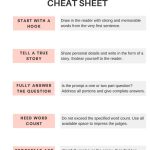
- Start with a hook. Your first sentence is vital. It needs to grab the reader’s attention and make them want to keep reading. This could be an anecdote, a surprising statement, or a rhetorical question that sets the stage.
- Create an arc. Every good story has a beginning, middle, and end. Introduce a situation or problem, describe your journey through it, and then share the resolution or the lesson learned. Always tie it back to your character and your future.
-
Structure and Flow: Guiding Your Reader.
- Even without headings, your essay needs a clear structure.
- Introduction: Hook the reader, introduce your main theme or the personal experience you’ll explore.
- Body Paragraphs: Each paragraph should focus on one main idea or part of your story, supported by specific details and reflections. Think of it as building blocks.
- Conclusion: Summarize your key takeaway, reiterate your passion and goals, and connect everything back to why you are a deserving candidate for this specific scholarship. End with a strong, forward-looking statement.
-
Word Count: A Blessing in Disguise.
- Adhering to the word count isn’t just about following instructions; it’s about discipline. It forces you to be concise, to choose your words carefully, and to cut out anything superfluous. Every word must earn its place.
-
The Critical Eye: Edit, Edit, Edit (and Then Edit Again).
- This is where many students falter. A first draft is never a finished product.
- Proofread for grammar, spelling, and punctuation errors. These can quickly undermine your credibility. Read it backward, read it aloud, use grammar checkers (but don’t rely solely on them).
- Check for clarity and conciseness. Are there simpler ways to say something? Can any sentences be combined or cut?
- Ask for feedback. Have a trusted teacher, mentor, or friend read your essay. Ask them: "What did you understand from this? What questions do you still have? Does it sound like me?" A fresh pair of eyes can catch things you’ve overlooked.
Common Pitfalls I’ve Seen (and How to Avoid Them)
Through my own experiences and watching others, I’ve noticed a few recurring mistakes that can derail even the most promising applications.
- Being Generic: The "I want to change the world" essay without any specifics. Committees read hundreds of these. Make yours stand out by being uniquely you.
- Boasting Without Reflection: Simply listing achievements without explaining their significance or what you learned from them. It comes across as arrogant rather than impressive.
- Ignoring the Prompt: Reading "Describe a time you failed" and writing about your greatest success. Always double-check that you’re directly answering the question asked.
- Grammar and Spelling Errors: These are instant red flags. They suggest a lack of care or attention to detail. Don’t let a typo cost you thousands of dollars.
- Procrastination: Rushing an essay never yields your best work. Give yourself ample time to brainstorm, write, revise, and get feedback. A strong scholarship essay takes time and effort.
- Sounding Desperate: While financial need is often a factor, your essay shouldn’t solely focus on how much you need the money. Instead, focus on your potential, your passion, and how the scholarship will enable you to contribute positively to the world.
The "Secret Sauce": Authenticity and Passion
Ultimately, what makes a scholarship essay truly powerful isn’t perfect grammar or a dazzling vocabulary (though those help!). It’s the raw, honest truth of your story, infused with your genuine passion and unique perspective. When you write from the heart, your voice shines through. When you believe in what you’re saying, the reader will too.
Think about the feeling you get when someone tells you a really good story. You lean in, you connect with the characters, you feel their emotions. That’s the feeling you want to evoke in the scholarship committee. You want them to feel like they know you, like they’re rooting for you, like investing in you is the most natural decision in the world.
So, as you embark on your journey of writing a scholarship essay, remember that stack of blank papers isn’t a barrier. It’s an invitation. An invitation to explore your own story, to articulate your dreams, and to convince a group of strangers that you are not just worthy, but truly exceptional. It’s not about being flawless; it’s about being authentic. And trust me, that’s a story worth telling. Go forth, tell your story, and may your words open the doors to the future you envision.