
I still remember the feeling. Staring at a blinking cursor on an empty document, the scholarship application form mocking me from another tab. "Write an essay," it demanded, "detailing your leadership experience and future aspirations." My mind was a desert. Leadership? Aspirations? All I could think about was the mountain of tuition fees and the shrinking balance in my bank account. It felt like an impossible task, a secret code I just didn’t have the key to. But over time, through many late nights, countless drafts, and a few moments of pure frustration, I started to figure it out. What I learned wasn’t just how to write an essay, but how to tell my story in a way that made people listen. And that, my friend, is what I want to share with you.
Think of me as your guide, someone who’s walked this path before, stumbled, picked themselves up, and eventually found a clearer way forward. This isn’t about fancy words or complicated theories. It’s about getting real, digging deep, and putting your true self on paper so that the people reading it can see the spark within you.
The first, and perhaps most crucial, step in this whole scholarship essay adventure is something most of us rush: understanding the prompt. I used to skim over them, grab a few keywords, and then immediately start typing whatever came to mind. Big mistake. It’s like trying to bake a cake without reading the recipe – you might end up with something edible, but it probably won’t be what you intended.
Take your time with the prompt. Read it slowly, word by word. Underline key terms. What are they really asking? Is it about leadership? Great, but what kind of leadership? Is it about overcoming challenges? Okay, but are they looking for a story of resilience, or how that challenge shaped your career path? Often, there are multiple layers. For instance, a prompt asking about a significant life experience might also be subtly probing your problem-solving skills, your empathy, or your ability to learn from mistakes. Don’t just answer the surface question; try to uncover the deeper themes they’re interested in. My trick was to break it down into smaller questions and then jot down bullet points under each. This way, I made sure I was addressing every single part of the prompt, leaving no stone unturned.
Once you’ve cracked the code of the prompt, it’s time for the really interesting part: finding your story. This is where many of us, myself included, hit a wall. "My life isn’t that interesting," I’d tell myself. "I haven’t climbed Mount Everest or cured a disease." And that’s the trap. Scholarship committees aren’t looking for superheroes; they’re looking for genuine people with potential, passion, and a unique perspective. Your story doesn’t have to be epic; it just has to be yours.
Start by brainstorming. And when I say brainstorm, I mean a messy, unfiltered brain dump. Grab a pen and paper – or open a blank document – and just start writing down anything and everything that comes to mind related to the prompt. Think about:
- Experiences: volunteer work, part-time jobs, school projects, personal hobbies, family responsibilities.
- Challenges: academic struggles, personal setbacks, times you felt overwhelmed.
- Achievements: awards, successful projects, times you helped someone, moments you felt proud.
- Passions: what truly excites you? What do you spend your free time thinking about or doing?
- People: mentors, teachers, family members who influenced you.
- Moments of growth: when did you learn something profound? When did your perspective shift?
Don’t judge anything at this stage. Just get it all out. For one essay, I remember a prompt about community service. My mind immediately went blank. But then I remembered a small, seemingly insignificant thing: helping my elderly neighbor with her gardening every summer. It wasn’t a formal volunteer program, but it taught me patience, the value of intergenerational connection, and even a bit about botany! That small memory became the foundation of a very successful essay because it was genuine and spoke volumes about my character.
After you have a long list, look for connections. Which of these experiences best illustrates the qualities the scholarship committee is seeking? Which ones truly resonate with the prompt? Which ones make you feel something when you recall them? Those are the stories with emotional weight, and those are the ones you want to tell. Think about the "why" and the "so what." Why did this experience matter to you? And so what did you learn or how did you grow because of it? The "so what" is often the most important part, as it demonstrates self-awareness and maturity.
Now, with a clear prompt understanding and a handful of potential stories, it’s time to outline. This step is a lifesaver, believe me. My early essays were just streams of consciousness, jumping from one idea to the next without a clear path. The result? Confused readers and ultimately, rejections. An outline brings order to the chaos.
Think of your essay like a journey. You need a beginning that grabs attention, a middle that explores the landscape, and an end that brings everything to a satisfying conclusion, leaving a lasting impression.
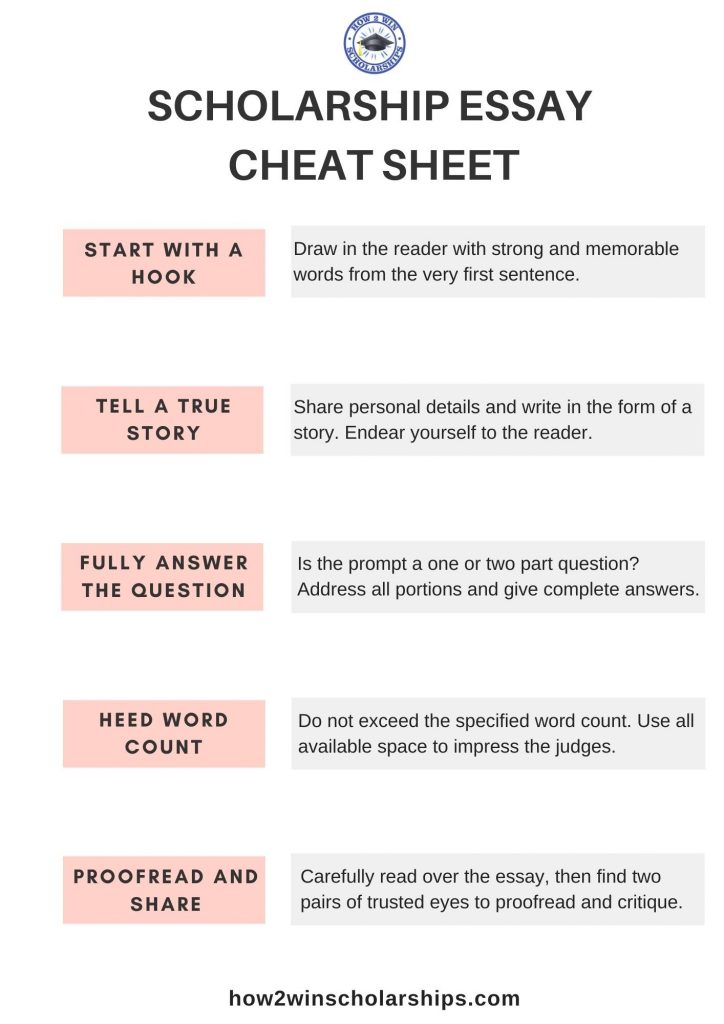
The Introduction (Your Hook): This is your first chance to make an impression, and you want it to be a good one. Don’t start with "My name is X, and I am applying for the Y scholarship." That’s boring. Instead, try to dive right into your story or a captivating idea.
- An anecdote: Start with a specific, vivid moment from your chosen experience. "The smell of freshly turned earth always brings me back to Mrs. Henderson’s garden, where I learned more than just how to prune roses."
- A thought-provoking question: "Can a single summer afternoon truly change the course of a young person’s life?"
- A bold statement: "My most profound lesson in leadership didn’t come from a classroom, but from a chaotic kitchen during a school bake sale."
Whatever you choose, make sure it quickly sets the stage for the story you’re about to tell and hints at the central theme of your essay. End your introduction with a thesis statement – a sentence or two that clearly states the main point or argument of your essay and how it connects to the scholarship’s values or the prompt.
The Body Paragraphs (The Heart of Your Story): This is where you develop your narrative, providing details, reflections, and connections. Each paragraph should focus on one main idea or aspect of your story.
- Show, don’t just tell: Instead of saying, "I am a responsible person," describe a time when you demonstrated responsibility. Don’t just say, "I learned the importance of teamwork," tell the story of a project where you had to work with others, faced a challenge, and how the team overcame it. Use sensory details – what did you see, hear, smell, feel?
- Elaborate and explain: Don’t just present facts; explain their significance. How did that experience impact you? What lessons did you draw from it? How did it change your perspective or actions?
- Connect back to the prompt: Throughout your body paragraphs, subtly weave in how your experiences relate to the qualities the scholarship committee is looking for. If they want leadership, show moments where you took initiative or inspired others. If they want resilience, recount how you faced adversity and bounced back.
The Conclusion (Leaving a Lasting Impression): This isn’t just a summary; it’s your final opportunity to make a powerful statement.
- Reiterate your main point: Briefly remind the reader of your core message, but don’t just repeat your thesis word-for-word. Rephrase it in a new, impactful way.
- Connect to the future: How have these experiences and lessons shaped your future aspirations? How will they help you achieve your goals, particularly those related to your academic or career path?
- Link to the scholarship: Explain why this specific scholarship is important to you and how it will enable you to continue pursuing your passions and making a difference. Make it clear that you understand what the scholarship represents and that you are a worthy investment. End on a strong, hopeful, and memorable note.
With an outline in hand, the actual writing process becomes less daunting. Now, you’re just filling in the blanks of a story you already know how to tell. This is where your unique voice comes into play. My early essays sounded stiff and formal, like I was trying to impress someone with big words. But that wasn’t me. The best advice I ever got was to "write like you talk, but a slightly more polished version."
Authenticity is key. Don’t try to sound like someone you’re not. Let your personality shine through. If you’re witty, let a bit of that humor show (appropriately, of course). If you’re earnest and reflective, lean into that. The committee wants to get to know you. I found that reading my essays aloud helped immensely. If it sounded awkward or unnatural when spoken, it probably needed a rewrite.
Use vivid language, but don’t overdo it. A well-placed metaphor or a descriptive adjective can bring a sentence to life. But a paragraph full of flowery language can be exhausting to read. Aim for clarity and impact. Choose strong verbs and specific nouns. Instead of "I walked quickly," try "I dashed" or "I hurried."
Be concise. Scholarship essays almost always have word limits, and every single word counts. Get rid of filler words ("really," "very," "just," "that," "in order to"). If a sentence can be shorter without losing its meaning, shorten it. Look for opportunities to combine sentences or rephrase ideas more efficiently. This isn’t about packing in as much information as possible; it’s about conveying your message with precision and power. I once cut nearly 100 words from an essay by simply removing redundant phrases and weaker adjectives, and the essay became much stronger for it.
Once you have a draft, step away from it. Seriously. Go for a walk, watch a movie, sleep on it. When you come back with fresh eyes, you’ll be amazed at what you notice – awkward phrasing, grammatical errors, ideas that don’t flow.
Then, it’s time to edit and proofread. This is not the same as writing. This is about refining, polishing, and catching mistakes.
- Read for clarity and flow: Does each paragraph logically transition to the next? Is your argument easy to follow? Are there any confusing sentences or ideas?
- Check for grammar, spelling, and punctuation: These small errors can make a big difference. They can make you seem careless, which is not the impression you want to give. Use spell check and grammar checkers, but don’t rely solely on them. They often miss context-specific errors.
- Read it aloud: As I mentioned before, this helps you catch awkward sentences and ensures your essay has a natural rhythm.
- Get a second (or third) opinion: Ask a trusted friend, family member, teacher, or mentor to read your essay. They might spot things you missed, or offer valuable feedback on whether your message comes across clearly. Be open to constructive criticism; it’s there to help you improve. I remember one time my English teacher pointed out that my essay started strong but then drifted in the middle. Her feedback helped me tighten up my narrative and make sure every part served a purpose.
- Check the prompt one last time: Did you answer every part of the question? Did you adhere to the word count, formatting requirements, and any other specific instructions? It’s a shame to write a brilliant essay only to be disqualified for not following simple instructions.
Writing a scholarship essay is undoubtedly a challenging process. It demands self-reflection, careful planning, clear writing, and meticulous editing. There were times I felt like giving up, convinced that my story wasn’t good enough or that I just didn’t have the words. But every time I pushed through, every time I refined a sentence or found a better way to express an idea, I learned something new about myself and about the power of storytelling.
Think of this essay not just as a hoop you have to jump through, but as an opportunity. It’s a chance to articulate your dreams, to reflect on your journey, and to understand what truly drives you. It’s a chance to practice telling your story, which is a skill that will serve you well far beyond scholarship applications.
So, when you stare at that blank page, remember that you have a story worth telling. You have unique experiences, valuable lessons, and aspirations that deserve to be heard. Take a deep breath, break it down, write from the heart, and then polish it until it shines. The scholarship committee isn’t looking for perfection; they’re looking for authenticity, potential, and that unique spark that only you possess. Go tell your story. I know you can do it.