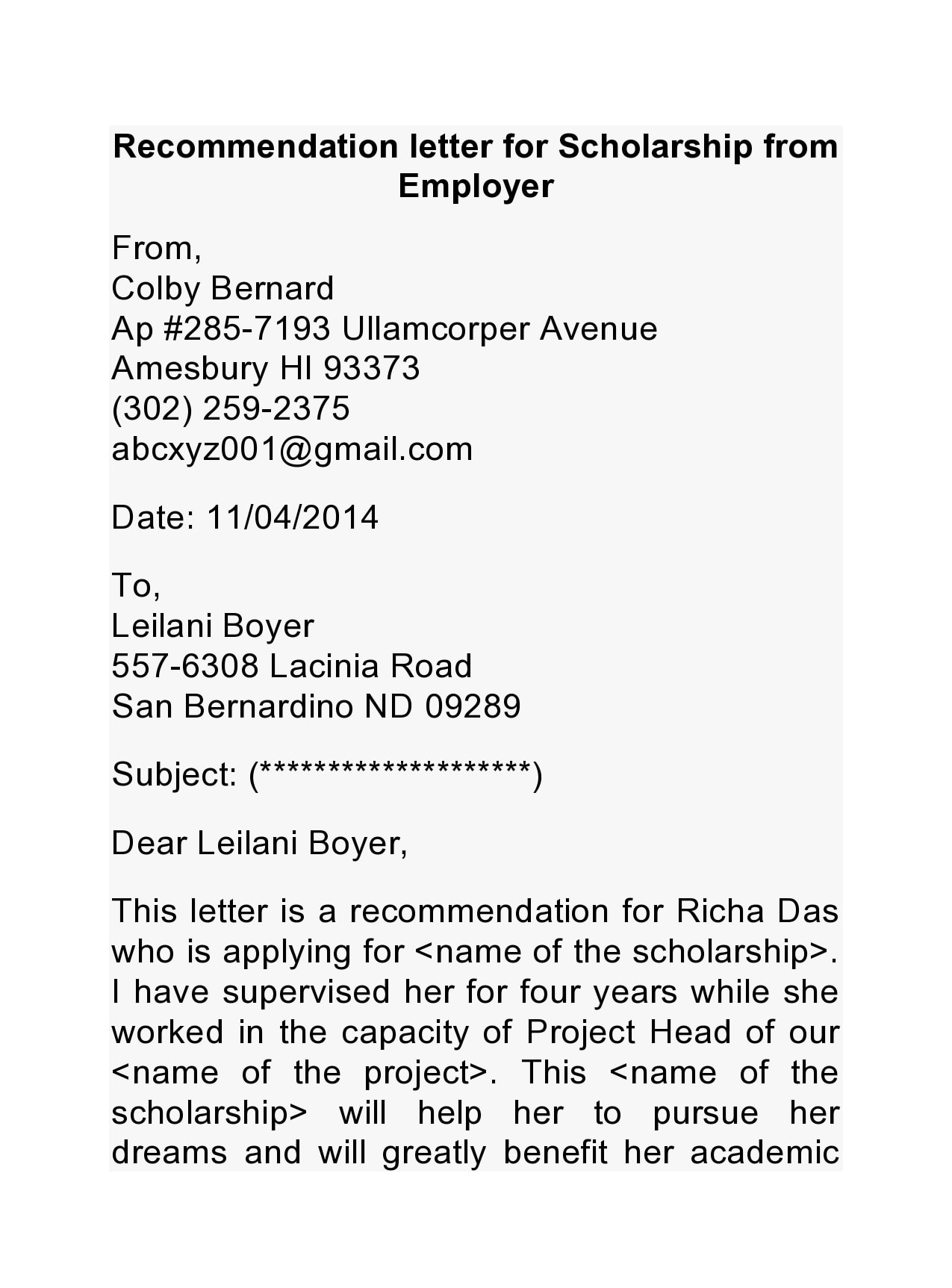
There was a time, not so long ago, when the idea of studying abroad felt like a distant, beautiful dream, a mirage shimmering on the horizon. The biggest hurdle, as it often is for many of us, wasn’t the desire or the academic drive, but the formidable wall of financial need. That’s when scholarships entered my world, not as a simple solution, but as a complex puzzle with many pieces. One of the most intriguing, and at times most daunting, pieces of that puzzle was the scholarship recommendation letter. It felt like a secret weapon, wielded by someone else, that could either propel me forward or leave me stranded. I remember thinking, "How do I even begin to ask someone to write something so important about me?" This is my story of navigating that maze, learning the unspoken rules, and discovering the profound impact a well-crafted letter can have on a young person’s future.
Imagine standing at the edge of a vast ocean, longing to cross, but without a boat. A scholarship recommendation letter, I quickly learned, is like someone vouching for your ability to build that boat, to navigate the waters, and to reach the other shore. It’s not just a formality; it’s a testament to your character, your abilities, and your potential, written by someone who has witnessed them firsthand. For scholarship committees, these letters are a window into who you truly are beyond your grades and essays. They want to see the real you, the person who shows up in class, leads a project, or tackles a difficult problem. They’re looking for an external validation that says, "Yes, this person is as remarkable as their application suggests, and perhaps even more so."
My first step, after the initial wave of anxiety, was to figure out who to ask. This wasn’t a casual decision. It was like choosing a witness for a very important case. You wouldn’t pick just anyone; you’d pick someone who knows you intimately, someone who can speak to your strengths with conviction and specific examples. My mind immediately went to a few teachers. There was Ms. Chen, my English literature professor, who had seen me grapple with complex texts, dissect arguments, and craft my own narratives. She knew my analytical mind, my persistence when faced with a challenging essay, and my occasional tendency to lose myself in a good book. Then there was Mr. Davies, my chemistry instructor, a man of few words but keen observation. He had witnessed my struggles in the lab, my moments of frustration, and eventually, my breakthroughs. He could speak to my problem-solving skills, my resilience, and my dedication to understanding scientific principles, even when they seemed impossible.
The common thread between them wasn’t just their role as teachers; it was the depth of our interactions. They had seen me beyond just a student ID number. They had seen my growth, my moments of brilliance, and my moments of stumbling. This became my first big lesson: choose recommenders who know you well, not just those with impressive titles. A glowing letter from a distant principal who barely remembers your name will always fall flat compared to a heartfelt, detailed account from a teacher who truly understands your capabilities. Avoid asking family members or close friends, no matter how much they love you. Their bias, while understandable, diminishes the letter’s credibility in the eyes of a scholarship committee. The goal is an objective, yet personal, assessment.
Once I had a shortlist, the next hurdle was the approach. How do you ask someone to dedicate their precious time to writing something so crucial for your future? I decided on a two-pronged approach: an initial informal chat followed by a formal, detailed request. I caught Ms. Chen after class one day, feeling a knot in my stomach. "Ms. Chen," I began, "I’m applying for a scholarship to study abroad, and a strong recommendation letter would really help my application. Would you be willing to write one for me?" Her response was warm and immediate, "Of course, I’d be happy to. Just send me the details." A huge weight lifted off my shoulders. With Mr. Davies, it was a similar conversation, though perhaps a little more formal given his reserved nature. He paused, then nodded, "I’ll consider it. Send me what you have."
This taught me another vital lesson: ask early! Don’t wait until the last minute. Recommenders are busy people with their own commitments. Giving them ample time – at least four to six weeks before the deadline, if not more – shows respect for their time and ensures they can write a thoughtful, well-considered letter. A rushed letter rarely shines.
After securing their initial agreement, the real work began for me. I couldn’t just drop the responsibility entirely on their shoulders. I had to equip them with everything they needed to write the most compelling letter possible. This package, which I compiled meticulously, included several key items:
- My Resume/CV: A concise overview of my academic achievements, extracurricular activities, volunteer work, and any relevant work experience. This served as a quick reference for them to recall specific events or accomplishments.
- My Personal Statement/Essay Draft: This was crucial. It gave them insight into my narrative, my aspirations, and why I was pursuing this particular scholarship and program. It helped them align their letter with my overall application theme.
- Details of the Scholarship and Program: I provided the name of the scholarship, the university I was applying to, the program of study, and most importantly, the specific criteria the scholarship committee was looking for. Did they value leadership? Academic excellence? Community involvement? Understanding these points helped my recommenders tailor their letters.
- Specific Achievements I Wanted Highlighted: This wasn’t about telling them what to write, but about gently reminding them of moments where I excelled. For Ms. Chen, I reminded her about my winning essay in the school’s creative writing competition and my active participation in our literature discussion group. For Mr. Davies, I mentioned a particularly challenging lab project where I took the initiative to troubleshoot an experiment that wasn’t working. These specific examples jogged their memory and provided concrete instances they could elaborate on.
- The Deadline and Submission Instructions: Clear instructions on how and when to submit the letter were non-negotiable. Was it an online portal? A physical mail address? Who was the contact person? Leaving no room for confusion was key.
- A Polite, Professional Request Letter/Email: This summarized all the above points, reiterated my gratitude, and offered to answer any questions they might have.
This comprehensive approach made their task significantly easier. It wasn’t just about me asking for a favor; it was about me partnering with them to create the strongest possible application. It showed them I was serious, organized, and appreciative of their effort.
What I hoped for in those letters, what I now understand makes a truly impactful scholarship recommendation letter, goes far beyond generic praise. A good letter doesn’t just say, "He’s a good student." It paints a vivid picture. It tells a story. It answers the implicit question: "Why this student for this opportunity?"
I wanted Ms. Chen to talk about my intellectual curiosity, how I wouldn’t just accept information but would question, analyze, and synthesize it. I hoped she would recall specific moments in class where I led discussions or offered unique insights that elevated the conversation. I wanted her to speak to my passion for learning, not just my grades. Perhaps she would mention my ability to connect different literary periods, showing a depth of understanding.
From Mr. Davies, I wished for a testament to my resilience and problem-solving skills. I remembered a particular incident in the lab where an experiment repeatedly failed. While others gave up, I stayed late, consulted extra resources, and eventually pinpointed a subtle flaw in the procedure, leading to a successful outcome. That moment, though small, demonstrated grit and analytical thinking. I hoped he would highlight my methodical approach, my ability to learn from mistakes, and my determination to see a task through, even when faced with adversity.
Beyond academics, I knew scholarship committees looked for character. Did I show leadership? Empathy? A willingness to help others? My volunteer work at the local community center, where I tutored younger students, was something I hoped would come across. Perhaps a recommender had seen me mentor a classmate struggling with a concept, or take initiative in a group project. These personal qualities, woven into the narrative of the letter, transform a student into a well-rounded individual with the potential to contribute meaningfully to a university community and beyond.
The best letters, I’ve since learned, use specific anecdotes. Instead of saying, "She’s a leader," a powerful letter might say, "During the group project on environmental sustainability, she took the initiative to organize our research, delegate tasks fairly, and mediate disagreements, leading our team to present a comprehensive and innovative proposal that earned top marks." This level of detail makes the letter believable, memorable, and impactful. It provides concrete evidence of the qualities the scholarship committee values.
Once the letters were submitted – often directly by the recommenders through an online portal – the waiting game began. But even then, my role wasn’t entirely over. A simple, heartfelt thank you note, either handwritten or via email, went a long way. It acknowledged their effort and expressed my deep gratitude for their support. And later, when I received the scholarship and the acceptance to my dream program, another thank you was absolutely essential. It closed the loop, letting them know their belief in me had paid off and reinforcing the positive relationship we shared. It’s about building bridges, not just crossing them.
Looking back, I realized there were common pitfalls I managed to avoid, mostly through sheer luck and a lot of frantic online research. One major mistake is asking too late. A last-minute request often leads to a generic, uninspired letter, or worse, a polite refusal. Another is not providing enough information. Expecting a recommender to conjure specific examples out of thin air is unfair and unrealistic. The more context and material you provide, the better equipped they are to write a compelling letter. And as mentioned, asking the wrong person – someone who doesn’t know you well, or who you haven’t had significant interactions with – is a wasted opportunity. The authenticity and specificity will be lacking.
The journey through the scholarship recommendation letter maze was more than just a procedural task; it was an exercise in self-reflection and relationship building. It forced me to articulate my goals, identify my strengths, and appreciate the people who had invested in my growth. It taught me the value of advocacy – not just advocating for myself, but having others advocate for me, armed with genuine stories and observations.
In the end, those letters weren’t just pieces of paper; they were endorsements of my potential, heartfelt assurances from people who had seen me strive, stumble, and succeed. They were powerful voices joining mine, telling the scholarship committee, "Give this student a chance. They are worth it." And thankfully, the committee listened. My dream, once a distant mirage, became a tangible reality, largely thanks to the carefully chosen words penned by my thoughtful recommenders. If you’re standing at the edge of your own ocean, contemplating your journey, remember the power of these letters. Choose wisely, prepare thoroughly, and express your gratitude sincerely. They might just be the wind beneath your sails.