
I remember it like it was yesterday, the crisp autumn air and the weight of a dream in my chest. Higher education. The words themselves held a certain magic, a promise of new horizons, deeper understanding, and a future brighter than anything I could imagine. But with that dream came a shadow, a looming, formidable obstacle that whispered doubts in my ear: money. How was I, a kid from a modest background, going to afford tuition, books, and living expenses? The cost of college felt like scaling Mount Everest with bare hands.
For a long time, that shadow felt overwhelming. I’d spend hours staring at university brochures, admiring their sprawling campuses and state-of-the-art facilities, only for a wave of despair to wash over me. It felt out of reach, a privilege for others, not for me. My parents, bless their hearts, worked tirelessly, but their earnings were for today, not for the distant, exorbitant cost of a degree. I knew they’d do anything for me, but I also knew there were limits.
Then, one evening, while I was glumly flipping through a magazine, an old family friend, Aunt Susan, came to visit. She was a no-nonsense woman with a heart of gold, always one to cut straight to the chase. She found me brooding and, after listening to my woes, simply said, "Well, have you looked for scholarships, dear?"
Scholarships. The word wasn’t new to me, but it felt abstract, like something only for academic superstars or incredibly talented athletes. I pictured a handful of prestigious awards, fiercely competitive, and certainly not for someone like me who was good, but not extraordinary in any single area. I mumbled something about not knowing where to start.
Aunt Susan just smiled. "There are thousands of them, for all sorts of reasons. You just need a good way to find them. Like a scholarship finder."
A scholarship finder. The concept was vague, yet it sparked a tiny flicker of hope. A finder? Could there really be a tool that gathered all these elusive opportunities in one place? My previous attempts had been… scattershot, to say the least. I’d typed "scholarships for college" into a search engine and been inundated with millions of results – university pages, outdated lists, scammy-looking sites promising easy money. It was like trying to find a specific grain of sand on a vast beach. I’d spent hours clicking links, only to discover most scholarships weren’t for my major, or my state, or had already passed their deadlines. It was exhausting and disheartening. I’d close my laptop feeling more lost than when I started.
That conversation with Aunt Susan was a turning point. It shifted my perspective from "Can I afford college?" to "How can I find the money for college?" It was an empowering distinction. The next day, armed with a fresh sense of purpose, I dove back into the internet, but this time, with a more focused query: "best scholarship finder platforms" and "how to find scholarships online."
What I discovered was a revelation. There were indeed dedicated websites, digital hubs, designed specifically to connect students like me with scholarship opportunities. These weren’t just simple lists; they were sophisticated tools, databases brimming with thousands, sometimes hundreds of thousands, of scholarships, each with its own criteria and deadlines. It was like someone had taken that vast, overwhelming beach and built a custom metal detector for me.
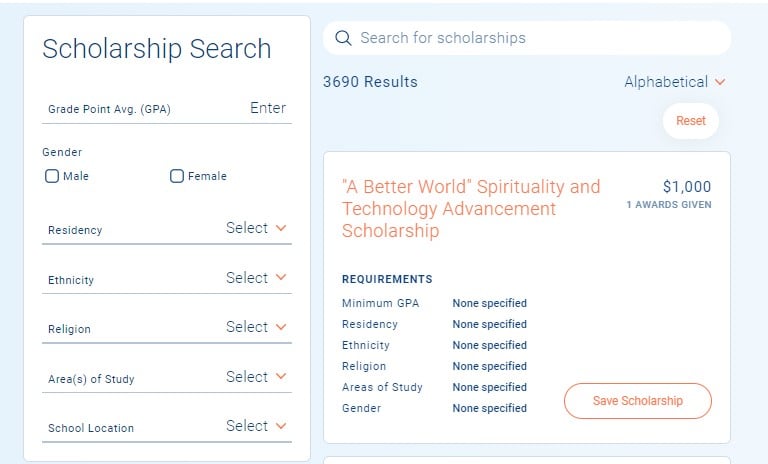
My first step was to choose one. There are several reputable scholarship search engines out there, and after reading a few reviews, I picked one that seemed user-friendly and had a large database. The very first thing it asked me to do was create a profile. At first, I found this tedious. Why did they need to know so much about me? My GPA, my intended major, my hobbies, my community service, my ethnicity, even my parents’ income bracket, my hometown, and the clubs I was in. But as I painstakingly filled out each field, a lightbulb went off. This wasn’t just data entry; it was the key to unlocking personalized matches.
This was the true magic of a scholarship finder. Instead of me sifting through irrelevant awards, the platform used my profile information to filter its massive database. It was like having a personal assistant dedicated solely to finding free money for my education. Suddenly, the daunting task of finding scholarships became manageable, even exciting.
The initial results page was a revelation. Dozens, then hundreds, of scholarships appeared, each with a brief description, the award amount, and the deadline. And here’s the kicker: many of them actually fit me. There were scholarships for students pursuing a degree in literature (my chosen field!), scholarships for residents of my state, scholarships for volunteers, even scholarships for people who loved hiking (which I did!). I remember seeing a scholarship specifically for left-handed students – it was a small amount, but it showed me just how diverse the criteria could be. This vast database truly held opportunities for everyone, not just the stereotypical valedictorian.
The filtering capabilities were a game-changer. I could narrow down my search by so many criteria:
- Major/Field of Study: This was crucial. I wasn’t going to waste time on engineering scholarships when I was passionate about English.
- Academic Merit: While some were GPA-dependent, many others didn’t require a perfect 4.0. There were plenty of scholarships for average students, too!
- Financial Need: These were often tied to income levels, providing much-needed support.
- Demographics: Ethnicity, gender, religion – many organizations focus on supporting specific groups.
- Location: Scholarships for students from specific cities, counties, or states.
- Extracurricular Activities/Hobbies/Talents: This was where I found some truly unique opportunities. My involvement in the school newspaper, my love for creative writing, even my part-time job at the local library – all of these could be criteria for various awards.
- Affiliations: If your parents or you belong to certain unions, professional organizations, or even companies, there might be scholarships available.
This ability to tailor my search saved me countless hours. Instead of feeling like I was searching for a needle in a haystack, I felt like the haystack was being automatically sorted for me, presenting only the needles that might fit my thread.
Beyond just finding scholarships, a good scholarship finder often offers additional, invaluable features. I quickly learned to appreciate:
- Application Tracking: As I started applying, keeping track of deadlines, required documents, and essay prompts became a challenge. The finder allowed me to mark scholarships as "applied," "saved," or "deadline passed," creating a personal dashboard that kept me organized. This was essential, especially when applying to multiple opportunities.
- Deadline Alerts: I could set up email notifications for upcoming deadlines for scholarships I had saved. No more frantic last-minute submissions because I’d forgotten a date.
- Resource Libraries: Many platforms offered more than just lists. They had articles on how to write a compelling scholarship essay, tips for interview preparation, advice on requesting recommendation letters, and even guidance on navigating financial aid packages. These resources were like having a personal college counselor at my fingertips, offering practical, actionable advice that I desperately needed. I spent hours reading through essay examples and refining my own writing.
- Scam Awareness: This was a huge relief. With so many scams online, it was reassuring to know that the scholarships listed on reputable finder platforms were generally legitimate. They often vet the scholarships before adding them to their database, providing a layer of protection that manual searching couldn’t.
Now, it wasn’t all smooth sailing. The process still demanded effort and persistence. I remember the sting of my first few rejections. I’d pour my heart into an essay, double-check every detail, and then receive a polite email stating that I hadn’t been selected. It was easy to get discouraged, to feel like giving up. There were moments when I questioned if it was all worth it, if I was just wasting my time.
One common pitfall I learned to avoid was only applying for the "big" scholarships – the ones offering tens of thousands of dollars. While those are certainly tempting, they are also the most competitive. I quickly realized the power of accumulating smaller awards. A $500 scholarship here, a $1,000 scholarship there, another $2,000 from a local community group – these amounts, when combined, added up significantly. They were often less competitive, too, as fewer people bothered with them. I started seeing every scholarship, no matter how small, as a brick in the wall of my financial aid. Each one lessened the burden.
I also learned the art of repurposing. I couldn’t write a brand new, unique essay for every single application. Instead, I developed a few core essays – one about my passion for literature, another about my volunteer experience, a third about overcoming a personal challenge. Then, I would adapt and tailor these essays to fit the specific prompt of each scholarship. It saved an immense amount of time and effort, allowing me to apply to more scholarships without burning out.
The biggest challenge, perhaps, was simply the time commitment. Finding, researching, and applying for scholarships became almost a part-time job during my senior year of high school. It required discipline and dedication. I set aside specific hours each week, treating it like any other important school assignment. But with each application I submitted, I felt a sense of accomplishment, a step closer to my dream.
And then, one spring afternoon, it happened. The first acceptance letter arrived, not from a university, but from a small foundation I’d found through the scholarship finder. It was for $2,500, renewable for four years! I remember holding that letter, my hands trembling, a wave of relief washing over me. It wasn’t just the money; it was the validation, the proof that my efforts were paying off. That first scholarship opened the floodgates. Over the next few months, more letters arrived, some small, some larger, each one a testament to the power of persistence and the utility of the scholarship finder.
By the time I enrolled in college, I had secured enough scholarships to significantly reduce my financial burden. I wasn’t debt-free, but I was in a position where I could focus on my studies, engage in campus life, and truly immerse myself in the college experience without the constant, crushing worry of tuition bills. That initial dream, once shadowed by financial anxiety, was now a vibrant reality.
So, if you’re standing where I once stood, dreaming of higher education but feeling daunted by the cost, let me share some advice, gleaned from my own journey:
- Start Early, Seriously Early: Don’t wait until your senior year. High school freshmen and sophomores can start researching and even applying for some scholarships. The earlier you begin, the more opportunities you’ll find and the less rushed you’ll feel.
- Create a Thorough Profile: When using a scholarship finder, don’t skimp on the details. The more information you provide about yourself – your academic record, interests, hobbies, background, volunteer work, talents – the more accurately the finder can match you with relevant scholarships. Every detail could be a key to an award.
- Don’t Dismiss the "Small" Ones: A dozen $500 scholarships add up to $6,000. These are often less competitive and easier to win. Apply for everything you qualify for, regardless of the amount.
- Embrace the Essay: Many scholarships require an essay. This is your chance to shine, to tell your story, to demonstrate your personality and passion. Don’t be afraid to be authentic. Keep a folder of your best essays and adapt them for different prompts.
- Persistence is Your Best Friend: You will face rejection. It’s part of the process. Don’t let it deter you. Learn from it, refine your applications, and keep going. Every "no" brings you closer to a "yes."
- Utilize All Features: Explore every corner of your chosen scholarship finder. Set up alerts, use the tracking tools, read the advice articles. These resources are there to help you succeed.
- Stay Organized: Keep a spreadsheet or use the finder’s tracking tool to monitor deadlines, application statuses, and required documents. Juggling multiple applications can get messy quickly.
- Beware of Scams: While reputable scholarship finders vet their listings, always be cautious. Legitimate scholarships will never ask you for money to apply. If it sounds too good to be true, it probably is.
My journey to college was paved not just with hard work and determination, but also with the invaluable assistance of a scholarship finder. It transformed a seemingly impossible task into a manageable, albeit challenging, quest. It empowered me to take control of my financial future and pursue my academic dreams without the crushing burden of debt. If you have the drive to learn, the desire to grow, and the willingness to put in the effort, a scholarship finder can be your most powerful ally in unlocking the doors to your educational future. It certainly was for me. Go find your future; the money is out there waiting for you to claim it.