
The dream of higher education felt like a distant star, brilliant and captivating, yet impossibly far away. I remember sitting at my kitchen table, a crumpled college brochure in one hand and a calculator in the other, watching the numbers on the screen spiral into an abyss of despair. Tuition, fees, books, living expenses – it all added up to a sum that felt insurmountable, a mountain range blocking the path to my future. That’s when someone, a kind teacher who saw the flicker of ambition in my eyes, first whispered the magic word: scholarships.
Scholarships. At first, it sounded like something reserved for the super-geniuses or the star athletes, a mythical prize I could never hope to win. But the more I looked into it, the more I realized it was a lifeline, a tangible way to bridge the gap between my aspirations and the harsh reality of financial limitations. My journey into the world of scholarship searching wasn’t a straight path; it was a winding road, full of dead ends, exhilarating discoveries, and moments of utter frustration. But looking back, every step was a lesson, and I’m here to share what I learned, hoping it makes your own odyssey a little smoother.
When I first started, I was utterly clueless. I typed "scholarships for college" into a search engine, and a tidal wave of links crashed over me. Websites promising millions in aid, forums filled with cryptic advice, and some that just looked plain fishy. My initial approach was like trying to catch fish with my bare hands in the middle of an ocean – chaotic and largely ineffective. I clicked on every link, filled out basic information on countless sites, and ended up with an inbox overflowing with spam and very few promising leads. This scattershot method quickly led to burnout.
My biggest mistake then was a lack of organization. Imagine trying to build a complex puzzle without ever looking at the picture on the box, and just throwing pieces everywhere. That’s what my early scholarship search felt like. I’d find a scholarship, jot down its name on a random scrap of paper, and then completely forget about the deadline or the specific requirements. It wasn’t long before I realized I needed a system, something to bring order to the chaos.
This was my first major turning point. I bought a simple notebook, dedicated solely to my scholarship hunt. Later, I upgraded to a spreadsheet on my computer, which I highly recommend. On this sheet, I created columns for the scholarship name, the organization offering it, the award amount, the eligibility criteria, the application deadline, the required documents (essay, recommendations, transcript), and a column for the application status (started, submitted, rejected, awarded). This simple act of organization was transformative. It allowed me to see everything at a glance, prioritize applications, and track my progress without losing my mind. It’s like having a map for your treasure hunt instead of just wandering aimlessly.
With a system in place, I felt ready to truly dive into the search. I learned that scholarships aren’t just one big pool; they’re more like a vast ocean with countless inlets and streams, each leading to different kinds of opportunities.
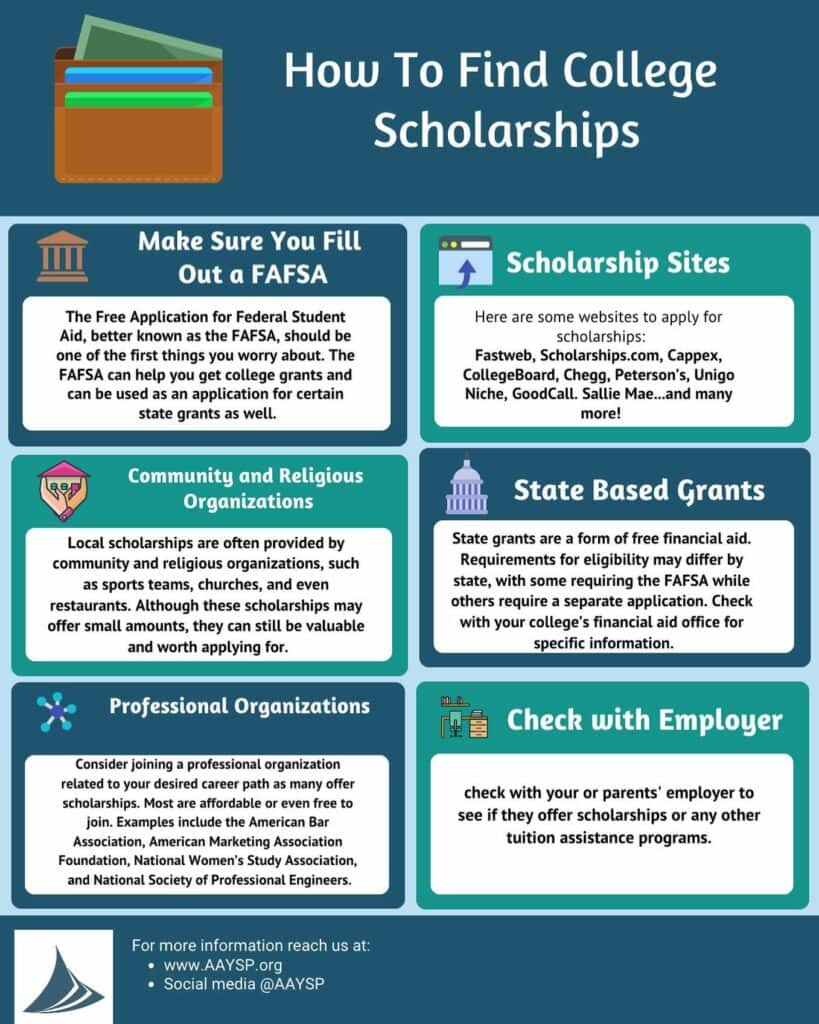
I started with the well-known online platforms. Sites like Fastweb, Scholarship.com, and College Board’s BigFuture are popular for a reason: they have huge databases. You create a profile, input your academic information, interests, and background, and they match you with potential scholarships. These can be a great starting point, a way to cast a wide net. However, a word of caution here: many of these sites will send you emails about everything, so be prepared for some noise. The key is to filter through it, focusing only on those that genuinely align with your profile and interests. Don’t be afraid to refine your search terms or adjust your profile to get more targeted results. I spent hours tweaking mine, adding every obscure club I was ever a part of, every volunteer hour, every unique skill. It paid off by revealing scholarships I wouldn’t have found otherwise.
But I quickly learned that the real gems often lie beyond these massive databases. My high school guidance counselor was an invaluable resource. She had a binder full of local scholarships, ones specific to our community, which often had far fewer applicants than the national ones. Think about it: a scholarship offered by your local Rotary Club or a regional credit union might only receive a few dozen applications, significantly increasing your chances compared to a national scholarship that attracts thousands. Don’t underestimate the power of your local community. Check with your town hall, local businesses, churches, and civic organizations. These "hidden" scholarships are often the most attainable.
I also discovered the importance of looking within the colleges themselves. Many universities offer their own merit-based scholarships or grants, often tied directly to your application for admission. Sometimes, simply applying to a college automatically puts you in consideration for these. Other times, there’s a separate application process through the financial aid office. It’s always worth a call or an email to the college’s financial aid department to ask about institutional scholarships. They want you to attend their school, and often have funds specifically earmarked to attract students like you.
Beyond that, I started thinking about my unique identity and experiences. Are you left-handed? There’s a scholarship for that. Do you have a specific heritage? Many organizations offer scholarships to support students from particular backgrounds. Are your parents employed by a certain company? Some corporations offer scholarships for employees’ children. Do you have a specific hobby, like knitting or competitive gaming? You guessed it – there are niche scholarships for almost everything imaginable. This is where your personal story becomes your greatest asset. Don’t just list your accomplishments; think about how your unique path makes you stand out.
Once I started finding scholarships that truly fit, the next challenge emerged: the application itself. This wasn’t just about filling in blanks; it was about telling my story, demonstrating my worth, and convincing a committee that I was the right candidate.
The essay, for instance, became my canvas. I used to dread writing, but for scholarships, I learned to see it as an opportunity to speak directly to the selection committee. The biggest lesson I learned about scholarship essays is this: answer the prompt, but also let your authentic voice shine through. Don’t try to guess what they want to hear; tell them who you are, what you’re passionate about, and why this scholarship matters to you. I wrote about my experiences volunteering at a local animal shelter, not because it was the most impressive thing I’d done, but because it genuinely reflected my values and dedication. I made sure to connect my experiences to the scholarship’s mission, explaining how the aid would enable me to continue pursuing my goals and make a difference. Always proofread meticulously, and then ask someone else to proofread. A fresh pair of eyes can catch errors you’ve overlooked a dozen times. My English teacher became my unofficial editor, and her feedback was invaluable.
Recommendation letters were another crucial component. I learned not to just ask any teacher or mentor. I specifically sought out teachers who knew me well, who had seen my work ethic and character firsthand, and who I knew would write genuinely positive and detailed letters. It’s not about who has the highest title; it’s about who can best advocate for you. When you ask for a recommendation, give them plenty of notice – at least two to three weeks, if possible. Provide them with your resume, a list of your accomplishments, the scholarship’s requirements, and the deadline. Make their job as easy as possible. A well-written, specific recommendation letter can truly elevate your application.
And then there are the practicalities: transcripts, test scores, resumes. Make sure your resume highlights your extracurricular activities, volunteer work, leadership roles, and any part-time jobs. Don’t just list them; briefly describe your responsibilities and achievements. For example, instead of just "Treasurer," write "Managed club finances, increasing fundraising by 15% through innovative event planning." Every detail contributes to painting a complete picture of you as a dedicated and capable individual.
The process was demanding, often feeling like a second full-time job. There were days when I felt overwhelmed, staring at another blank essay prompt or another list of requirements. I received plenty of rejection emails, sometimes just a polite "we regret to inform you…" and other times no response at all. Each rejection stung a little, but I learned to view them not as failures, but as redirections. Every "no" brought me closer to a "yes," because each one taught me something – maybe I needed to refine my essay, or perhaps that scholarship wasn’t the right fit after all. It’s a marathon, not a sprint, and perseverance is your best friend.
One of the most valuable pieces of advice I can give is to apply, apply, apply. Even if a scholarship amount seems small, say $500 or $1,000, those amounts add up quickly. A few small scholarships can make a huge difference in reducing your overall debt or covering specific expenses. Don’t dismiss a scholarship just because it’s not a full ride. Every dollar is "free money" that you won’t have to pay back.
I also learned to be wary of scams. If a scholarship asks for money to apply, or guarantees you a scholarship for a fee, it’s almost certainly a scam. Reputable scholarships never ask for money to apply. If something feels too good to be true, it probably is. Stick to trusted sources and do your research on any unfamiliar organization.
The waiting game after submitting an application can be agonizing. It teaches you patience like nothing else. Sometimes I’d hear back in a few weeks, sometimes months. And sometimes, I wouldn’t hear anything at all, which I eventually learned to interpret as a silent rejection. It’s important to manage expectations and keep applying for other opportunities while you wait. Don’t put all your eggs in one basket.
Eventually, the letters started arriving – not all rejections this time. I remember the thrill of opening that first acceptance letter, a small scholarship from a local women’s club. It wasn’t life-changing on its own, but it was proof that my hard work was paying off, a tangible sign that my dream was indeed reachable. That feeling fueled me to keep going. I ended up piecing together several scholarships, some small, some more substantial, which collectively made my college education affordable.
Beyond the financial relief, scholarships provided something else unexpected: confidence. The process of searching, applying, and articulating my goals forced me to reflect on my achievements and aspirations. It helped me understand my own story better and gave me the courage to share it. It connected me with incredible organizations and people who believed in my potential, offering not just money, but also mentorship and networking opportunities.
So, if you’re standing at the foot of that financial mountain, feeling overwhelmed and unsure where to start, please know that you are not alone, and there is a path forward. Your scholarship odyssey might be challenging, but it is entirely navigable. Start early, stay organized, be persistent, and most importantly, be yourself in your applications. Every unique aspect of your life, every passion, every challenge you’ve overcome, is a potential key to unlocking a scholarship. Don’t be afraid to tell your story. Don’t be discouraged by rejections. Keep looking, keep applying, and keep believing in your dream. The aid is out there, waiting for you to find it. Your future is worth the effort, and with a little determination and the right strategy, you can make that distant star a bright reality.